The setting for your RPG probably has an economic problem. Not that the adventurers raided a dragon’s hoard and now are essentially trillionaires, not that you can’t afford the gorgeous dice you’ve been ogling on Etsy, not that the company behind the game has decided that your books should exist on a subscription model. It’s that the economies aren’t weird enough.
You’re playing a game with wizards, dragons, and whatever the heck a flumph is, and the economy is essentially market capitalism with a different currency. The real world has myriad economic systems that are more exotic, complex, and compelling than what is presented in a typical D&D campaign. It only makes sense to rethink some of the systems you’re presenting in the game.
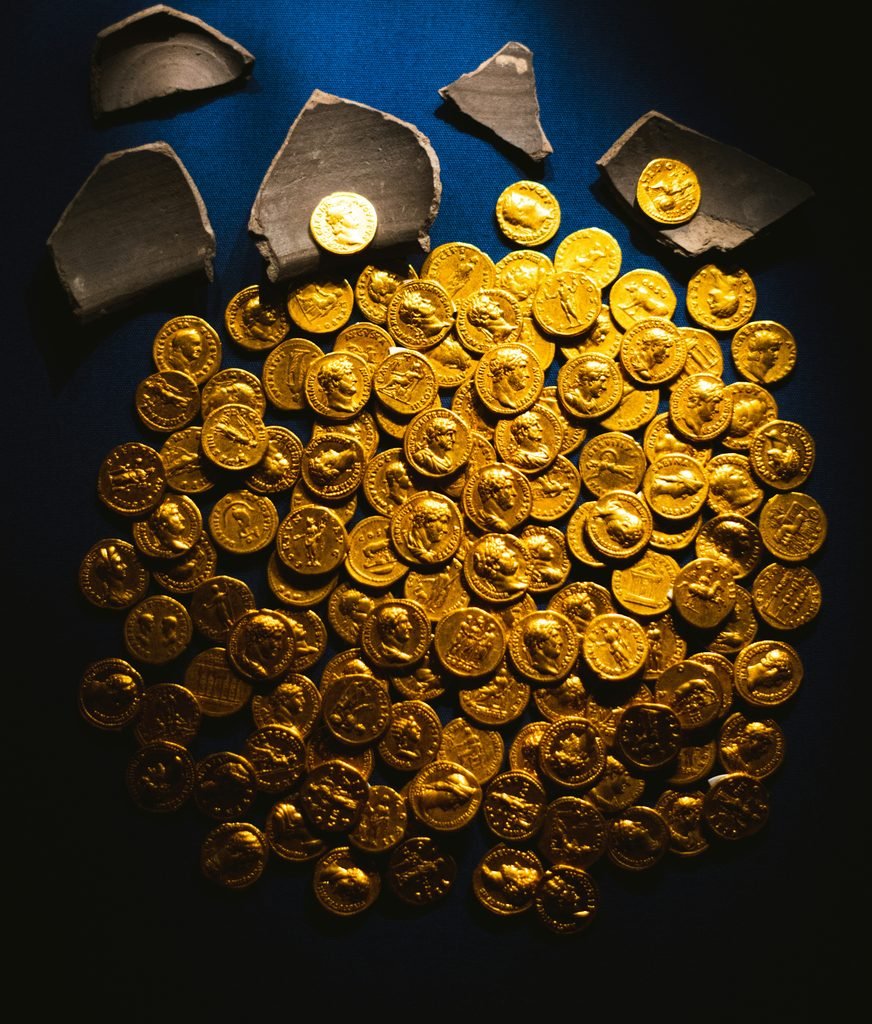
That’s not to say you need to completely step away from the default, it’s the default for a reason. Economies should feel familiar and easy to understand as a rule in order to keep them in the background. However, bringing in more exotic options can do two things: it can highlight the fantastic nature of the world, and it can reinforce the thematic and narrative ideas you want to bring to the game. And, some of the alternative systems used in the real world can inspire that.
This is Part of a Discussion on RPG Economics
This article exists in conversation with my colleague Esper’s articles on Fantasy Economics. His advice is great in terms of creating an economy for your game that feels real and grounded in the story you’re trying to tell. Everything that he has to say can back up the ideas presented here and be used to implement them in your game.
- You can read part 1 here.
- And part 2 here.
As Esper notes, you don’t need to build a detailed model for every economy your players encounter, leaning on the default with some added flavor is more than enough. But, if you want to make something that feels more exotic or meaningful, there are some radically different models out there that you can draw on.
Getting Started
I’m going to explore three main clusters in this article, but I’ll only scratch the surface of what’s out there:
- Centralized Economies have one power which essentially owns everything and decides how goods are distributed.
- Gift and Abundance Economies rely on concepts of shared ownership, or the idea that sharing and exchange should be mediated by social norms, not transactions.
- Power Economies focus on what people can control or take, not based on ideas of work and exchange.
For each, I’ll explain some specific models you might see within that category and give some ideas on how to use them in a game, in terms of what species or kingdoms might have those models, and/or what story beats they would support.
Centralized Economies
A centralized economy is where the wealth is all controlled and organized by a single individual or group. These have come about in a number of ways over time, but they’re naturally associated with strong central authorities.
Mandatory Service
One of these models is the idea of mandatory service, where instead of exchanging currency on private markets, everything is owned by a central authority and distributed based on the work done by individuals. The system of mit’a in the Incan Empire worked this way, everything and everyone was seen as being under imperial control. People were required to do work for the Empire, and in exchange were provided with the basics they needed to live. After their conquest, the Spanish manipulated this system into a darker form, where they conscripted individuals to work in the mines, without the sense of duty and social protection that came in earlier forms.
Manorialism and Feudalism
Manorialism and feudalism in the European Middle Ages had a similar feeling. The king owned everything, and gave portions of the land to lords who gave portions to knights. Along with the land came any peasants who lived on it, working as farmers, hunters, woodcutters, and so on. A percentage of production was paid up the social ladder in the form of taxes or tribute. Alongside the taxation, the lords and knights were obliged to provide for the people and serve the king. Cities and travelers were outside this system of control, but it shaped the economies in which they functioned.
Scrip
19th and 20th century “company towns” had a punishing but unique economic model. The company responsible for the factory, mine, railroad or other industrial project central to the town built everything from houses to schools to stores. A percentage of workers’ pay was given in the form of currency called scrip which was produced and recognized by the company. The company ran stores and public services which were paid for out of this scrip. If workers went into debt they were issued credit until they earned enough scrip to pay back. The problem was that pay was so low, and prices so high, that many generations could live and die in debt peonage and effective slavery to the company.
Temple Economies
Temple economies have existed at several times throughout history, notably in ancient Egypt and the Fertile Crescent. In essence, religious institutions acted as banks and economic overlords. People brought tithes and offerings from anything extra they produced to the temple, either mandated or as part of their devotion. Part of this went to sustain the priests, and often the government as well. In return, the faithful could ask for loans from the temple, and be given enough to sustain themselves through hard times.
Using Centralized Economies
These kinds of economies present a tremendous power dynamic which stories can exploit. Tales of great empires clashing or heroes rising to resist oppressors benefit from this setup. The leaders matter so much and their presence is felt everywhere. If they are noble, they have a paternalistic care for society. If they are cruel, they are harsh dictators.
In D&D, lawful, centralized groups like myconids or dwarves might trend toward this kind of system, and societies like the Thayans might adopt it. I could see dragons reveling in the idea that they own everything and everyone, and all they survey lives by their will and whim.
You could run a whole campaign using scrip as a theme. Start the adventurers out in a remote outpost, offer them supplies and gear based on company credit, which can be repaid by taking on quests and through a percentage of their loot. Slowly work the math so that they just keep getting deeper in debt to where the only option is to fight the owners.
Gift and Abundance Economies
These economies take private ownership away from the center of the economic system. The focus of the economy becomes not what you have, but who you give it to and how it is used. In some cases, no one owns anything and people simply use what is there when they need it. In others, the economic engine isn’t buying and selling, but the exchange of gifts between equals.
Prestige Economies
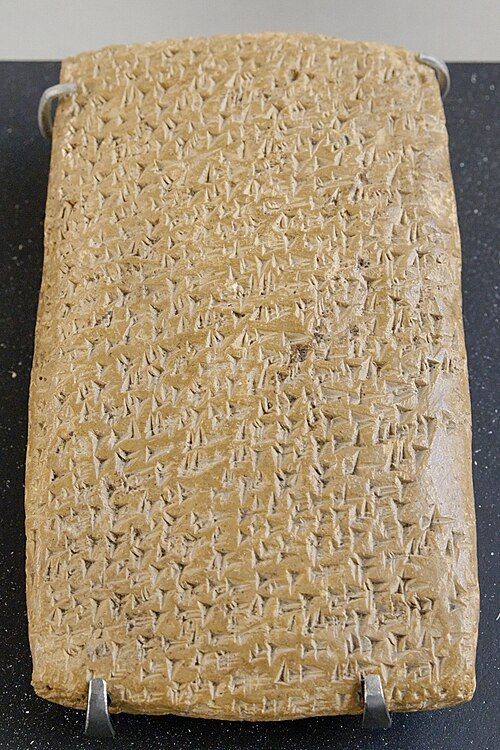
In the Bronze Age, international trade was handled not through formal ties of purchase and sale, but through gifts exchanged between leaders. Instead of merchants selling goods across borders, the king would send a letter about events in their kingdom to a neighbor. In theory, that neighbor would send trade goods as a measure of goodwill and sign of friendship. This has existed in other ways throughout history in various forms, both between individuals and across societies. The system relies on two notions. First, everyone wants to maintain good relations, so gifts flow easily, because otherwise you’re a social pariah. Second, if your demands are excessive, they may be ignored and there is the same risk of being excluded in the future.
Abundance Economies
These are the inverse of prestige economies. Instead of asking for what you need, you give away what you don’t. They’re explored in detail by Robin Wall Kimmerer in her book Serviceberry, which I can’t recommend highly enough. In brief, you give neighbors whatever you have or produce in excess, and they do so in turn. If my garden has produced too many tomatoes to eat, I give them away instead of selling them. Often this extends beyond human or humanoid actors. Foraging wild plants or hunting animals is seen the same way; you take only from the excess that it can afford to give. These systems rely on a social contract in a similar way to prestige economies. If you start to take advantage of the system or hoard goods, you’re going to be excluded from the entire economy.
Communalism
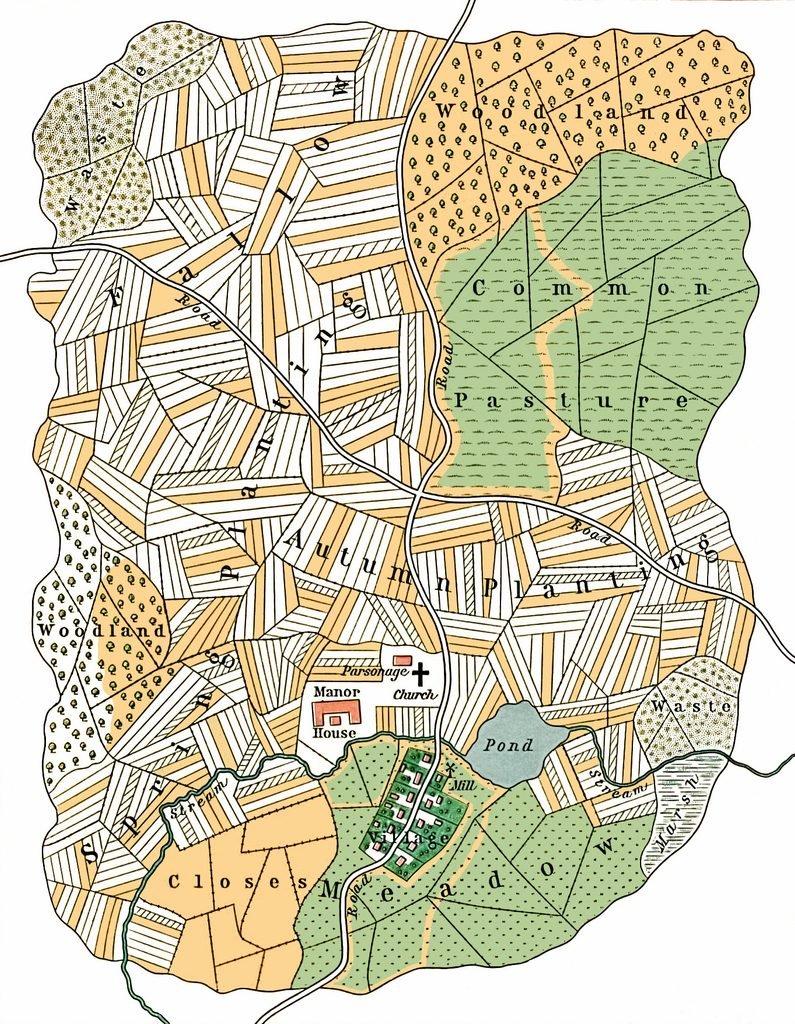
In the European Middle Ages, in parallel with the feudal system, each community had a common. This was a central area of land that no one owned, or rather, that everyone owned. People could use sections of it to raise small crops, graze animals, or even live on when they needed to. There was an assumption that because everyone needed it, everyone would care for it collectively and not take more than they needed. In spite of the idea of the tragedy of the commons, it actually worked very well, until the arrival of enclosure and privatization of the land, which broke the system.
Using Gift and Abundance Economies
These economies are great for setting the stakes of an adventure. Showing players that they have a share in the collective wealth of society can set the stakes of a war or plague in a striking way. It’s not just that the community is threatened, it’s that THEIR community is threatened. They also feel natural, caring, and pastoral for those kinds of settings.
On the other hand, they can feel weird and alienating for outsiders. If you’re not part of the community and you’re not in the system, you don’t own anything, which means you need to learn how things work and build a reputation before you can participate, which can be a powerful story beat.
In less formal structures, these fit groups like halflings, druids, or pastoral communities, who live close to the land. If they’re more formalized, groups with complex hierarchies and social rules like elves would be interesting choices for these systems.
The struggles of enclosure could be a fascinating hook. A group of centaurs who see their forest as a commons and rely on a gift economy go to war against a group of loggers, homesteaders, or others who see themselves as owning the land. The players could be enlisted to protect the outsiders, and eventually must negotiate peace between the two sides.
Power Economies
While it’s not a formal term, I’m using power economies to describe economic systems where the focus is not on the exchange of goods, but on dominance and control over others.
Mercantilism
This was the economic thinking that underpinned the height of European colonialism. The theory was that the home country needed to maintain a positive trade balance in order to bring in gold and silver to enrich the country. In practice, this meant aggressive colonial expansion followed by importing raw materials from the colony to be exported back as manufactured goods. The system became self-perpetuating because the wealth it brought was often used to pay for ships, weapons, and men used to pursue military adventurism, which expanded the nation’s colonies, which were governed by mercantilist policies, which brought in more wealth.
Perimeter
This isn’t a “real” economic system, but one tied up in D&D lore, drawn from an old issue of Dragon Magazine. Hobgoblins are known for an economic and political system that focused on control. A hobgoblin owns what they can physically protect and control, things within their “personal perimeter.” Groups cooperate because it is the best way to extend that perimeter. Exchange is not mediated by law or coinage, but by collaboration and mutual respect. Entire kingdoms and empires are built up based on the premise that the mutual protection and support provided allows the group to extend their perimeter and gain wealth and power by doing so.
Raiding and Tribute Economies
In a number of societies the economy was shaped by raiding, piracy, kidnapping, and other forms of theft and violence. The Vikings and much of the British Isles had these kinds of societies, as did the Mediterranean during the time of the Barbary pirates. The raiders would plan yearly raids in the same way others would plan out cycles of planting and harvest. This could be taking treasure, goods, or even people who could be ransomed or sold as slaves. The money and goods were then brought back and would enrich both the people and their neighbors through trade relations. In many cases, potential victims would pay tribute or ransom to the raiders to spare them, often creating annual cycles that needed to be maintained. Internally, this system was self-perpetuating. A warlord had to continue raiding and raiding successfully, because if they tried to disrupt the cycle, they would not remain in power long.
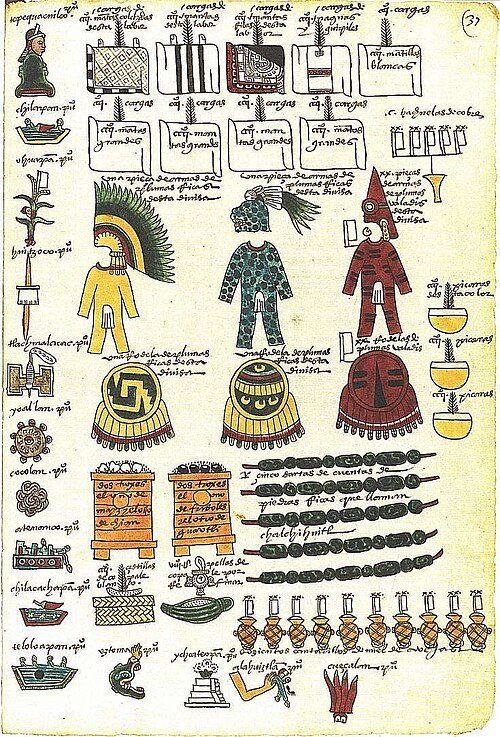
Lists the tribute towns were required to pay to the Aztec empire.
Using Power Economies
Power economies go beyond the mere exchange of goods. The stories they frame look at how societies think about strength and control. Wars and social conflicts around them are shaped by the economy.
Obviously, hobgoblins are an example of an in-game society using a perimeter economy. The githyanki or duergar might pursue mercantilism, taking over territories and pushing trade imbalances on them. The drow, orcs, or a range of barbarian groups might work with a raiding economy, gaining wealth by force.
In a game, a classic hook is the village needing protection from a group of raiders, a village that may have always paid tribute, but lacks the resources this year. A party might need to go and negotiate with the raiders, giving them a window into their world.
So Go Ahead, Make It Weird
These examples go to show that there’s no reason, in a fantasy game, that you need to play it safe in terms of the way you imagine how economies work.
- A desert civilization could be built entirely around rations of water.
- A dragon might claim ownership of all the gold in a kingdom, leaving everyone else “borrowing” their property.
- A cluster of temples may ask tithes from all residents in exchange for the social protections they offer.
That’s not to say every community needs to have an exotic economy. More familiar systems are far easier for players to accept and don’t distract from the rest of the game. However, if you need to paint a group as being unusual or you want to hammer home a theme, presenting a novel economy can go a long way.
My name is Joe Gaylord and, as Lazarus Game Lab, I make bestselling TTRPG content by nerds, for nerds. My adventures and supplements let you play games that are a little cleverer, a little more interesting, and a little different, the kinds of things you want to have for your table.
Check out my work on: https://lablazarus.carrd.co/