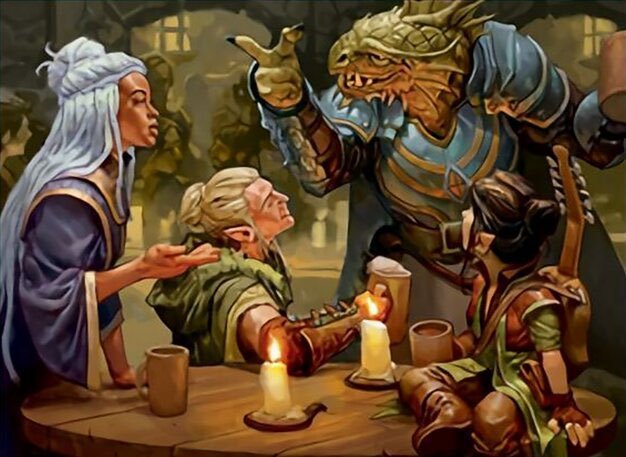
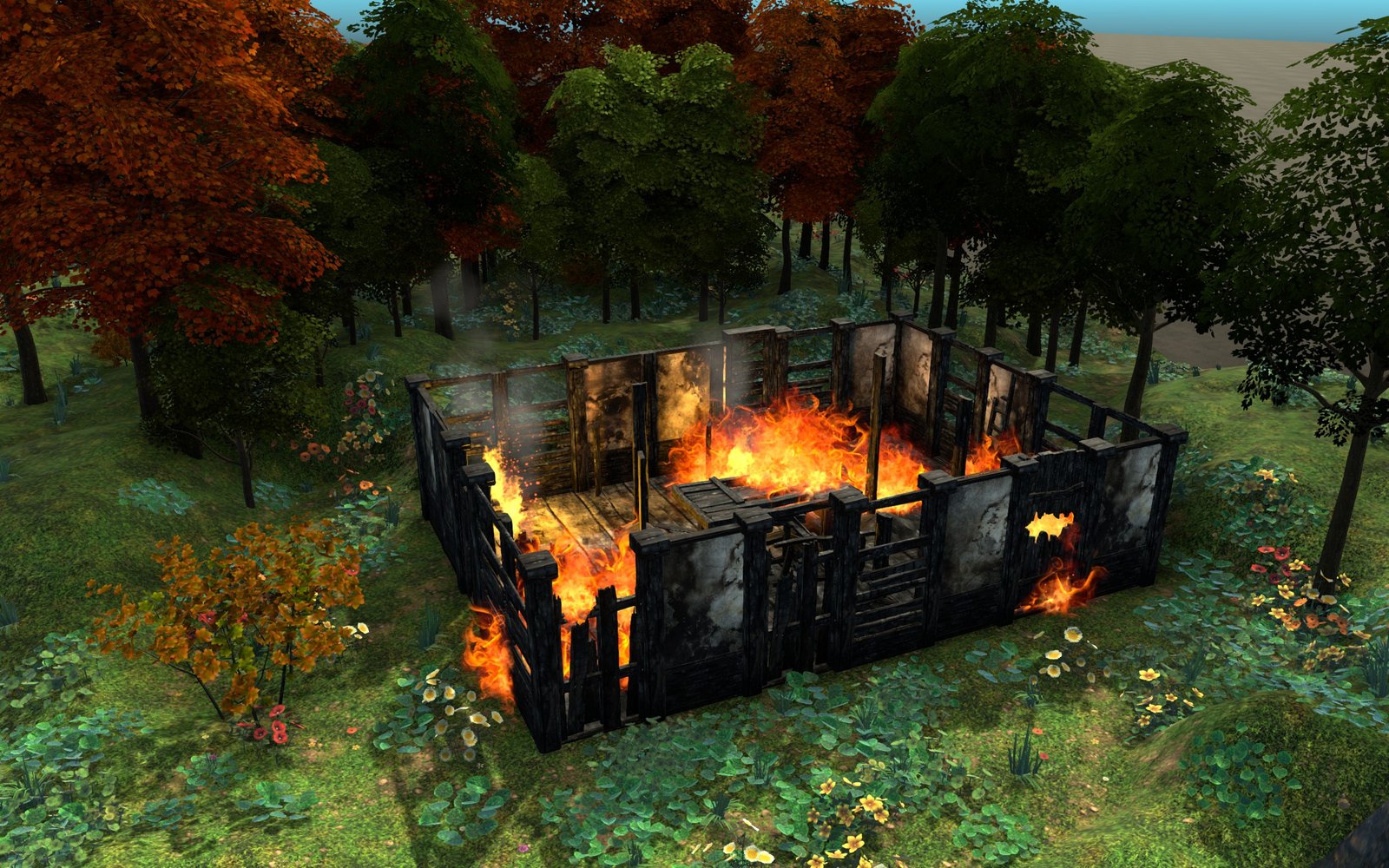
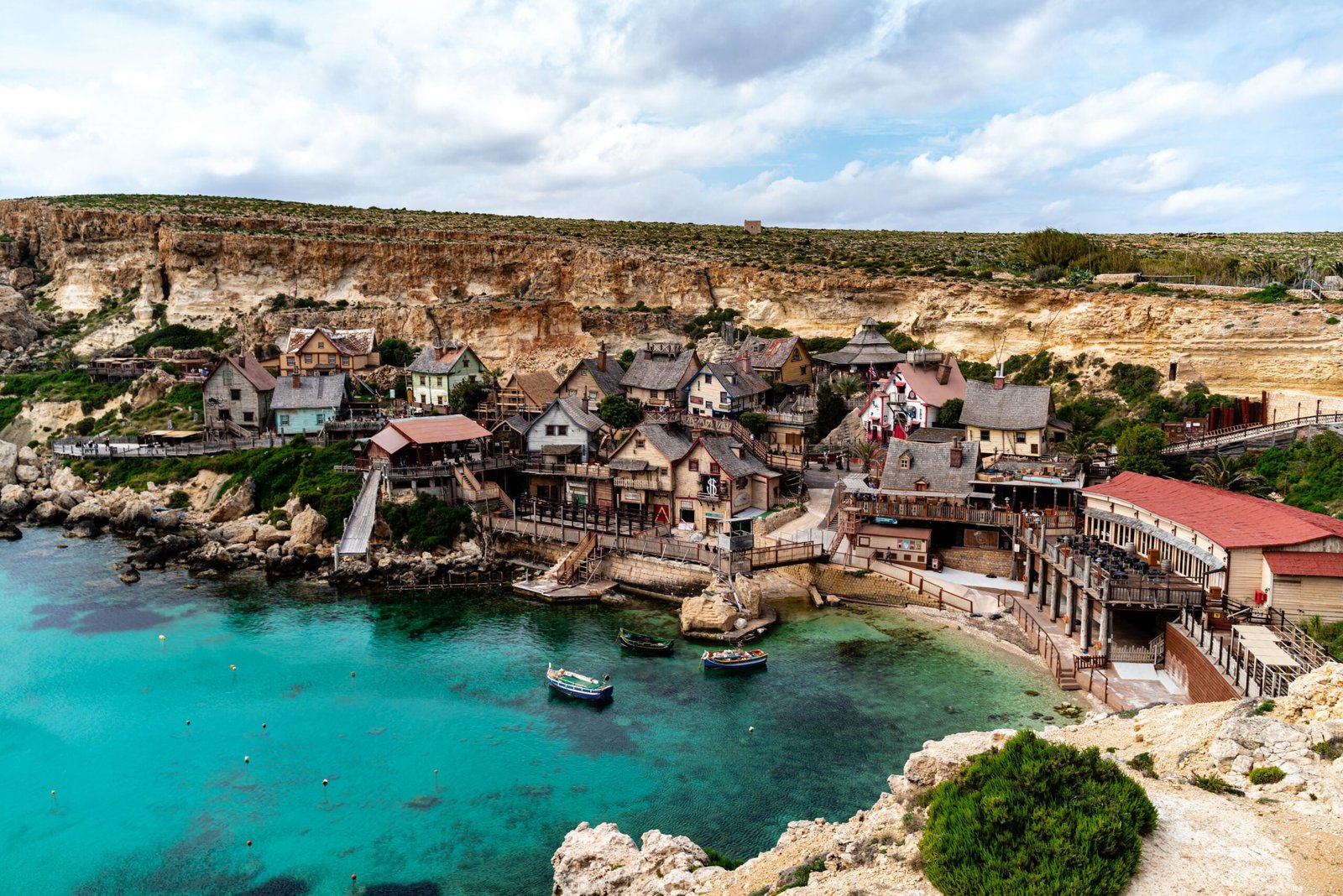
Good morning, good afternoon, good evening, everyone. Thank you for coming back. Grab yourself a drink and a snack, come sit by the hearth. Please, stay awhile and listen.
One of the biggest hurdles I faced very early on in my journey as a DM was visuals. Now, first and foremost, I need every single one of you, my dear guests, to understand you do not need art to tell the story. You can play tabletops like Dungeons and Dragons and Pathfinder without figures, dioramas, and epic high quality maps. If you and your table is able to afford it, that is perfectly fine, but please don’t feel that it’s mandatory to have these things to have a good time. I say this because when I started my journey as a Dungeon Master, I began in an age of giants.
To my understanding, tabletop games hit a renaissance era in the mid 2010s. A glittering spotlight was flashed upon the community with Twitch, Critical Role, Dimension 20, Netflix, and Stranger Things, amongst others who brought attention to this neck of the woods. I never really got into tuning into live streams, a lot of the big ones take place while I’m working (a currently true fact). I’d listen to the Youtube uploads occasionally while I’d be cleaning or working on my homebrew setting. It was still inspiring, until I asked myself how do I compare myself to the giants?
My table then was not a sound stage in Los Angeles. It was a cold basement, all of us around two tables pushed together, a wet erase map and laptops. I decided fairly quickly I wasn’t going to try to be like the giants. Why set the bar at what I saw as an impossible height? Simply put, I didn’t need to. I just wanted to tell a story amongst friends.
You don’t need perfectly made props and handcrafted world maps. You need yourself, a group of players, and more inspiration than a bard at a tavern. I like running a hybridization of theater of mind and virtual battlemaps, and it saves me from being overwhelmed. I use Roll20, as my table consists of friends from around the world. I’m still rocking the free membership, even. You don’t need to spend money to have a good time.
Paper Shield, Pencil Sword
I started map making by sketching in a notebook, something I could copy square for square onto a wet erase grid mat. My first figures were Lego minifigures (and this was well before Lego released official Dungeons and Dragons themed minifigures). I traded my notebook and minifigures for Roll20 and found Dungeondraft, a neat map maker that lets you get pretty detailed once you figure it out. As both Paper and Dungeondraft use a top down approach to building, it’s easy to translate a paper plan to a digital plan.
Planning maps isn’t easy for everyone. Even I struggle with it at times. This is where having a pool of resources comes in handy. In the beginning, I used to heavily rely upon Pinterest for maps, monsters and npc images. Over time, this is no longer the case, especially with the rise of AI art. It’s been easier to just use Pinterest as a quick inspiration source while I build up my own collection, either by payment or by hard work, perseverance, and hard work. This is especially true with the dreams of eventually releasing the campaign for people to read and experience for themselves.
Your maps will look like garbage at times. You may completely restart from scratch sometimes. Don’t let yourself be disheartened, my dear guests. I have thrown out entire maps the week before a session and started from scratch. It’s not fun, but sometimes it’s easier to start from a fresh page.
I did my best to document my process. I admit I feel like I have an unfair advantage, I look at building floorplans frequently and reimagine them into maps for practice. I love architecture and map making and details. I’m probably weird for enjoying such things, but I enjoy it all the same.
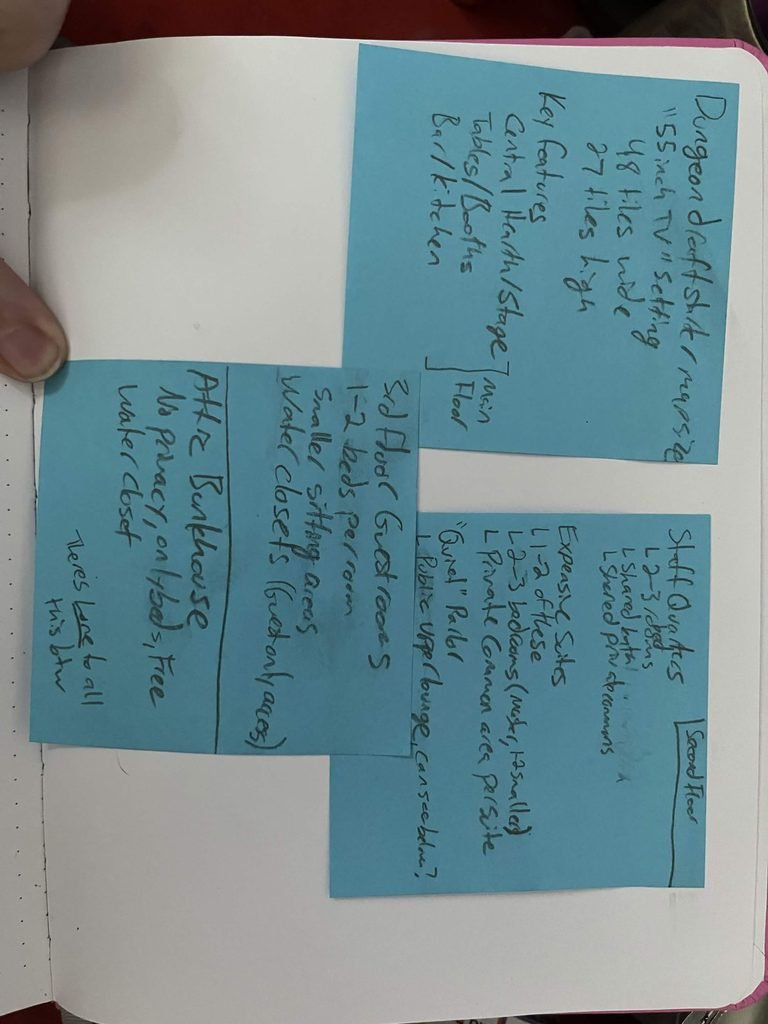
I apologize if my process doesn’t seem to make sense. It’s hard to explain something I’ve never had to explain before. I took pictures and notes on my process, and I’ve done my best to make it understandable.
The Lore and The Process
What better way to describe my process than by showing you the space I like to imagine myself in when I write these articles. So with that I give you the lore.
In my books, there is a tavern in the town of Sungrasp. Sungrasp sits towards the base of one of the many mountains that makes up the Gulskum Tekros mountain range. It’s the last town before the climb up to the town of Cohtza and Pelendria’s Heartforge. Sungrasp and Cohtza have a friendly relationship, think Ivarstead and the Greybeards from Skyrim.
I’m fond of Sungrasp. Here it is mainly quiet, though looking out the window I can see the busy day market, the fountain that marks the heart of the town, and a small quiet park just beyond.
The tavern here, known as the Wandering Wizard, is quieter during the day. Named after the occupation of the owner’s brother, of course there’s no shortage of magical influence. The lighting here is always perfect, the noise travels just far enough for the first two floors to always hear and see the performer, but does not disturb the two floors dedicated to the sleeping areas. The Duntirah’s, the inlaws of the Champion of Magic Alyssah, are kindly folk, the owners of the Wandering Wizard Tavern. Even before the Champions were called upon, the matron Meryl often provided charitable service. If you have no coin, you still can find rest in the bunkhouse on the top floor, forsaking some privacy for a free bed and food to go with. They don’t provide scrap either, but hearty meals that renew one’s spirits. Her husband Angelo is a talented baker and chef, his meals always just right. The free meal is accessible for all, but if you want something from their actual menu you have to pay for it.
The paid for rooms on the third floor are affordable, though more geared towards traveling adventurers and their companions, here for the night and gone the next day. The expensive suites are on the second floor as well, but of course have enchantments that provide silence when entering them. There’s a quieter lounge on the second floor, still with a view of the stage but the sound reaches just right. The royal family of Alamer has even stayed here on a few occasions, as the current Princess has family from Cohtza.
The main floor is where most of the business occurs. At night you may expect music, dancing, voices singing in the revel of a hard day of work. Sungrasp is like that, full of hard working people that come together and celebrate when the day is done. During the day however, merchants gather and trade between themselves raw materials negotiated for over good food and drink. It’s still busy, but not full of the raucous cheer of the night. Sometimes a young bard takes the stage during the daytime, practicing and providing a calming atmosphere for the day’s occupants. I myself take my own sort of refuge here, working on my many stories and endless ideas during the day.
The stage here is a work of art in its own right. A short series of stairs raises the performer up just high enough to be seen by all. They have a decent twenty feet of space, separated just enough from guests, bordered by firepits and stairs. There’s enough of a walking space around it too, keeping the performer separated but not isolated from guests (perfect for the more bewitching singers). There is ample seating, tables either in neat booth sets, often occupied by larger parties and families celebrating, or along the clusters of round tables. If you ascend a shorter set of stairs there are tables for two and party rooms with no view of the stage. The bar is to the side when you enter, doors in the back lead to the kitchen and beyond. Meryl, now older, can often be found near the entrance, welcoming guests and arranging rooms for them to stay in as needed. Her children help run the tavern now, but both she and her husband continue working happily alongside them.
Quite the example right? Now how do we take the narrative and bring it to life? Firstly, understand we are starting small here, the description may be grand, a touch messy, but overall this is the interior of just one building. A building may have many rooms, but it is just that. One building, maybe a shed in the back, a rudimentary stable out front, or whatever you decide. So let’s break this down into tangible steps.
- Determine what it is and the vibe. Example: Tavern/Inn, cozy vibe.
- Determine your scale (while often for tabletops we use the 1 square is equal to 5 ft, this is not always the case, as different systems use different grids)
- Identify key explorable features you want and separate into groups (first floor, basement, attic, ect)
- Start plotting. Expect to make tons of adjustments. How this is done varies, and this is also where having Pinterest comes in handy because you can see what others have done and take inspiration. I like to do a general block out for specific areas, especially when I play around with elevation.
- Some places have secrets and some places do not. Here there are no secret doors, no secret treasury, no hidden details obscured by magic (save for the light glamours that draw away attention from any unpleasant odors and sights that would be considered unsightly for guests). A GM has basically two versions of every map, the one their players see and the one that has the things players don’t get to see. Digitally, this can be done with overlays and “GM layers,” simplifying the process by just revealing as they go along. I do not miss the days where I held my notebook, angled away from player eyes and stretched over tables to reveal secret doors by erasing part of the wall.
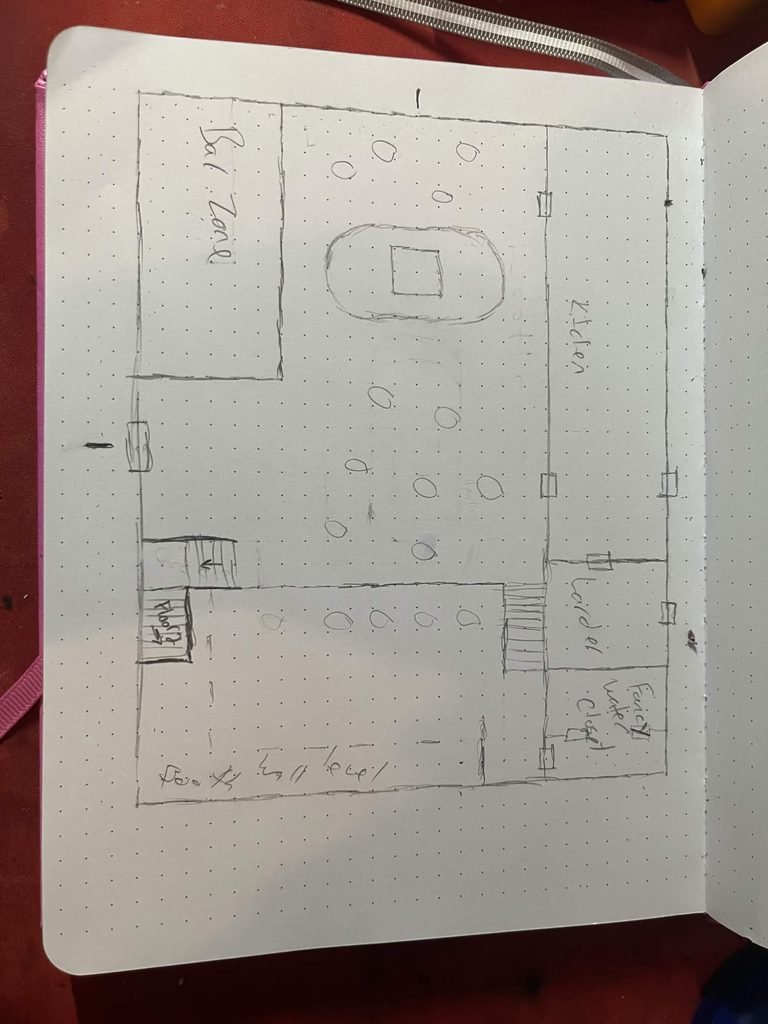
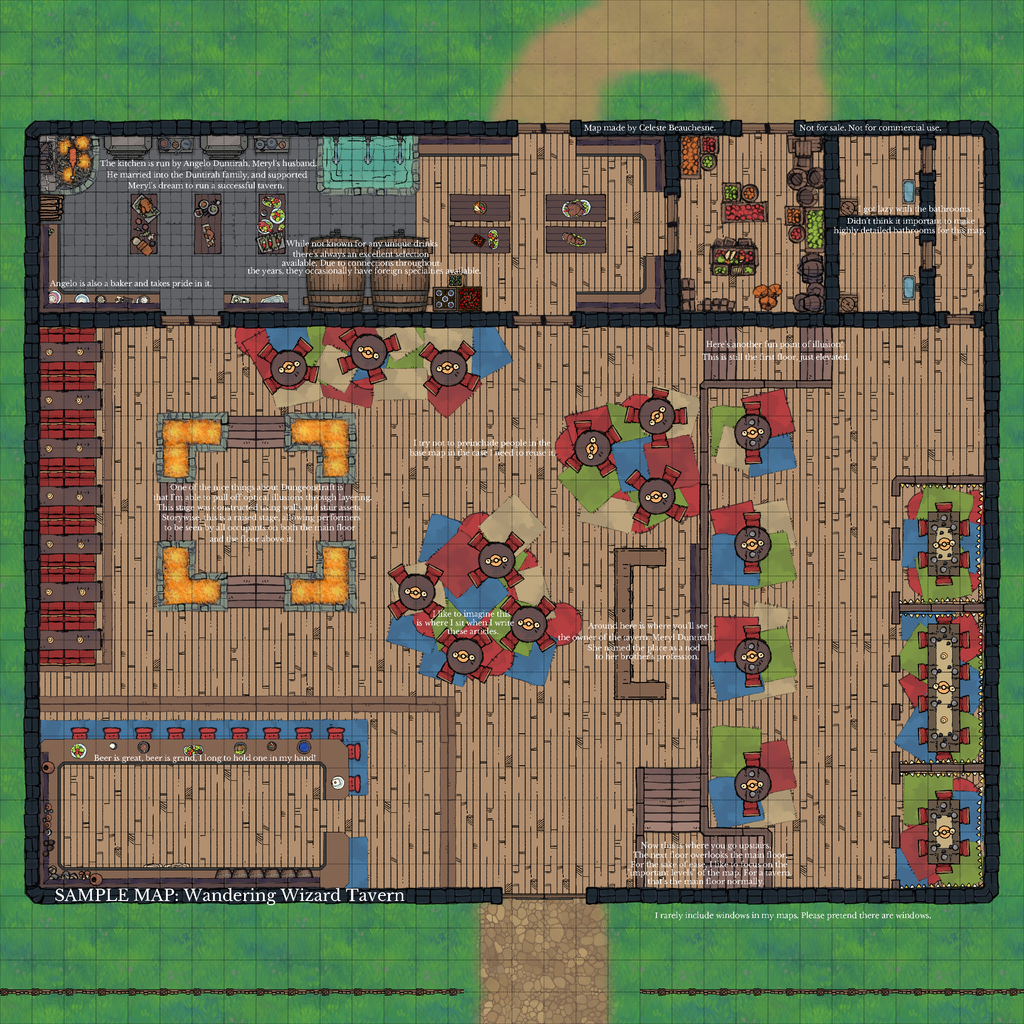
I’ve included links to both Dungeondraft and the assets I used made by their respective artists. I cannot recommend their assets enough, as all three that I mainly go to have not only assets you can purchase, but free assets for you to use and try out. There are so many different styles for Dungeondraft assets, including really detailed, videogame-like assets out there as well, not just for fantasy, but scifi, westerns, and so much more.
Alas, I see that the first of the day’s workers are beginning to trickle in, so we must part for now. Until next we meet, goodnight, sleep tight, I will see you again soon.
Get Dungeondraft here.
Find Crosshead’s Assets here.
Find 2Minute Tabletop’s Assets here.
Find Gnome Factory’s Assets here.

Hello folks! I am Celeste Beauchesne, a creative individual with her fingers in a lot of pies. A sort of jack-of-all-trades, I love various forms of art, writing, and tabletop gaming. I am working on a novel series referred to as the Chronicles of Alamer, opening a jewelry business, and caring for my beloved partner!