Tabletop roleplaying games are often viewed as pure entertainment. Dice, character sheets, and fantasy worlds do not immediately suggest education or development.
But recent studies increasingly start pointing in another direction. TTRPGs can support how children think, communicate, and grow.
A Learning System in Disguise
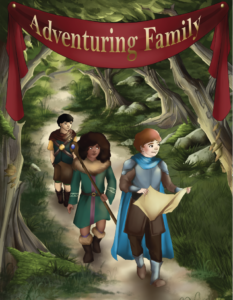
At their core, tabletop roleplaying games ask players to step into a role, make decisions, and experience consequences within a structured environment.
This creates a powerful combination of imagination and cognitive engagement.
Studies suggest that roleplaying games can support both cognitive and psycho-social development, offering a natural way for children to build skills while playing.
Executive Functions at the Table
Executive functions refer to a set of mental skills that help us plan, focus, and manage our behavior. These include working memory which helps us hold and use information, cognitive flexibility which allows us to adapt to new situations, and self-control which helps us think before acting. These skills are essential for learning, problem-solving and social interaction, and they develop gradually throughout childhood.
TTRPGs engage all of them simultaneously.
During play, children track story elements and rules, adapt to unexpected outcomes, and think before acting. This constant engagement closely mirrors techniques used in cognitive and behavioral therapies, where guided scenarios help strengthen attention and decision-making.
Social Skills and Emotional Growth
TTRPGs are full-on social experiences. Players collaborate, solve problems, and navigate interpersonal dynamics through their characters.
In doing so, they naturally practice empathy, communication, emotional regulation, and conflict resolution.
Because everything happens within a fictional setting, children can explore emotions safely. They can take risks, make mistakes, and try different approaches without real-world consequences. This makes roleplaying especially effective as a low-pressure environment for social learning.
Why TTRPGs Work So Well for Children
The key factor is engagement. Playing is one of the most effective learning methods available. It naturally combines problem-solving, creativity, and communication.
TTRPGs build on this by adding structure through rules, direction through narrative progression, freedom through player agency, and connection through collaborative storytelling. Children are not passively receiving information. They are actively participating in a system that rewards thinking, planning, and cooperation.
The Parent as a Game Master
Do not fall into the trap of turning a game session into a lesson! The developmental benefits are already built into the experience.
What matters most is creating a safe and supportive environment where children feel comfortable making choices, expressing themselves, and working together. When the focus stays on collaboration rather than competition, even simple sessions can provide meaningful developmental value.
Final Note
Tabletop roleplaying games can actively occupy a unique space between playing and learning, while supporting critical life skills such as decision-making, communication, and emotional awareness.
And their greatest strength?
They educate without it feeling like teaching.

Nikos Kyriakoudis is a Learning & Development specialist and the creator of Adventuring Family TTRPG. He is passionate about using storytelling and games to help people learn, connect, and grow.



3 responses to “TTRPGs and Kids: How TTRPGs Build Real-World Skills”
More and more therapists are using RP as a way to safely let people work through problems. This all works even with adults too. You really do show one of the unexpected benefits of these games.
There could be several articles written about the psychology of RPing.
Indeed, I collaborated with pediatric psychologists and counsilors to create my TTRPG. We are discussing on how we could adapt it further, as they now also focus on veterans dealing with PTSD.
It is a lot of food for thought and definetely more articles will follow.
All thanks to our editor WallyDM 🙂
This was such a great read, Nicos. I especially appreciated the point about children practising emotional regulation and communication through fictional scenarios. As a parent, I’ve noticed many of the same things at the table: kids collaborating naturally, adapting to unexpected outcomes, and becoming more confident as they step into their characters. I’ve also watched quiet kids suddenly become the loudest voice at the table once they start speaking in character.
One of my favourite parts of games is that the learning happens almost invisibly. The kids are so focused on solving puzzles, negotiating with goblins, or coming up with ridiculous plans that they don’t even realise they’re practising teamwork, improvisation, and problem-solving in real time. Some of the funniest moments come from solutions no adult at the table would ever think of.
I also loved your point about not turning the session into a lesson. Once imagination takes over, the growth kind of sneaks in naturally from there. Great article!