Standing at the base of a 50-foot stone obelisk in Luxor, I realized my TTRPG descriptions of ancient ruins barely scratched the surface of what they should be.
Most of us have been there, describing a desert as “hot and sandy” while our players quietly drift away. Walking through the towering obelisks of Philae and Kom Ombo taught me a different lesson. The ancient world stood magnificent, colossal, and deeply purposeful. I found myself surrounded by painted stories in temples that felt like a mystical intersection of history and mythology. That experience changed the way I build my worlds. It transformed my sessions from “Generic Sand Dungeon #4” into something that actually felt alive.
Here are three lessons from the Nile to help you move beyond generic stone boxes and create architectural experiences your players will actually remember—even skeptical ones like Greg.
Lesson 1: Building for Awe
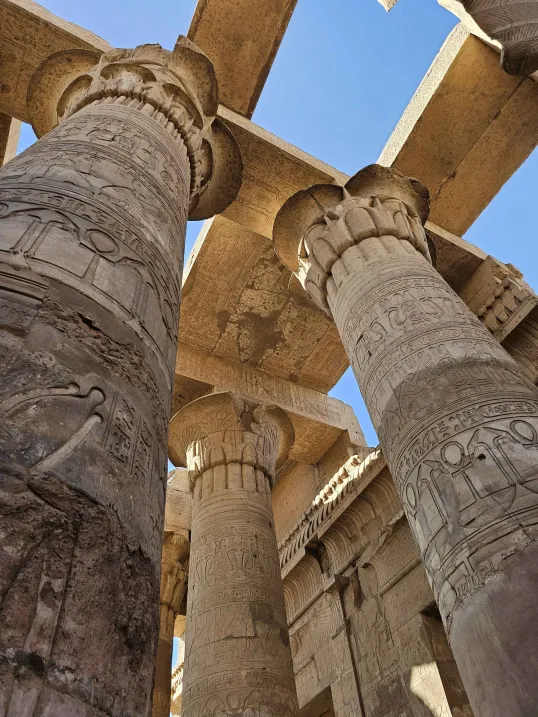
At Karnak, the world’s largest religious complex, you encounter purposeful design. From the Avenue of Sphinxes to the vast “Forest of Stone”, every obelisk and guardian statue is placed with intent. Every step marks your place before the gods.
To bring this immersion to your table, start by treating a temple as a living hub. Give it royal treasuries, administrative centers, and political stages. When spaces serve multiple purposes, the world feels real instead of staged. Use these four key design principles to bring that living hub to life:
- Processional Entries and Tension: Karnak begins long before you reach its inner chambers. Whether it’s the Avenue of Sphinxes at Karnak or a bridge of weeping statues leading to a Shadowfell fortress, use the environment to create tension before the fight. Try this: give your players a long deliberate entry. A path lined with silent stone sentinels. No combat, no dialogue. Just the environment itself makes it feel like something is watching them.
Architecture as a Narrative (The anti-lecture method)
- Story Through Exploration & Discovery: Karnak wasn’t built to be explained; it was built to be experienced. In its prime, it was a vibrant city of 80,000 workers, and every carving served a purpose. Draw inspiration from Thutmose’s Wadjet Hall, where painted stories of past victories weren’t decoration, they were intimidation. Skip the “history lesson” NPC. Instead, place statues that exaggerate power or murals that depict specific lore. When players piece the story together through what they see (like a chiseled-off name or a recurring motif), they own that knowledge. It stops being the DM’s notes and starts being a discovery they’ll actually remember.
- The Forest of Hidden Threats: The Great Hypostyle Hall contains 134 colossal pillars. At this scale, a standard battlemap stops working. Sightlines break, shadows dominate, and movement becomes uncertain. The result? A tense game of hide-and-seek where positioning matters more than damage output. Now your players have to figure out new tactics for the encounter without the routine damage trading.
- Celestial Alignment: Want to take it further? Align your sacred spaces with the stars. Perhaps a secret door only opens when the winter solstice sun hits a specific stone, or a sacred lake might only reveal sunken treasure during a lunar eclipse. Now the environment is dynamic and changes with time.
The Takeaway:
Don’t just place players in a room; place them on a path. Let the architecture tell them how to feel before anything happens. Because when the space itself carries meaning, your world stops feeling like a map … and starts feeling like a memory.
Lesson 2: The Logic of Duality
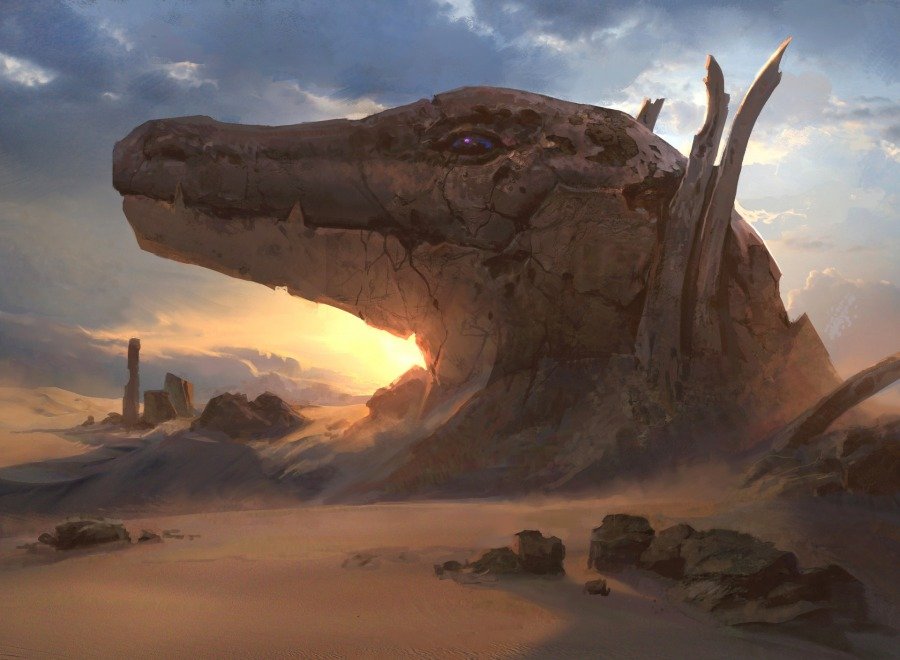
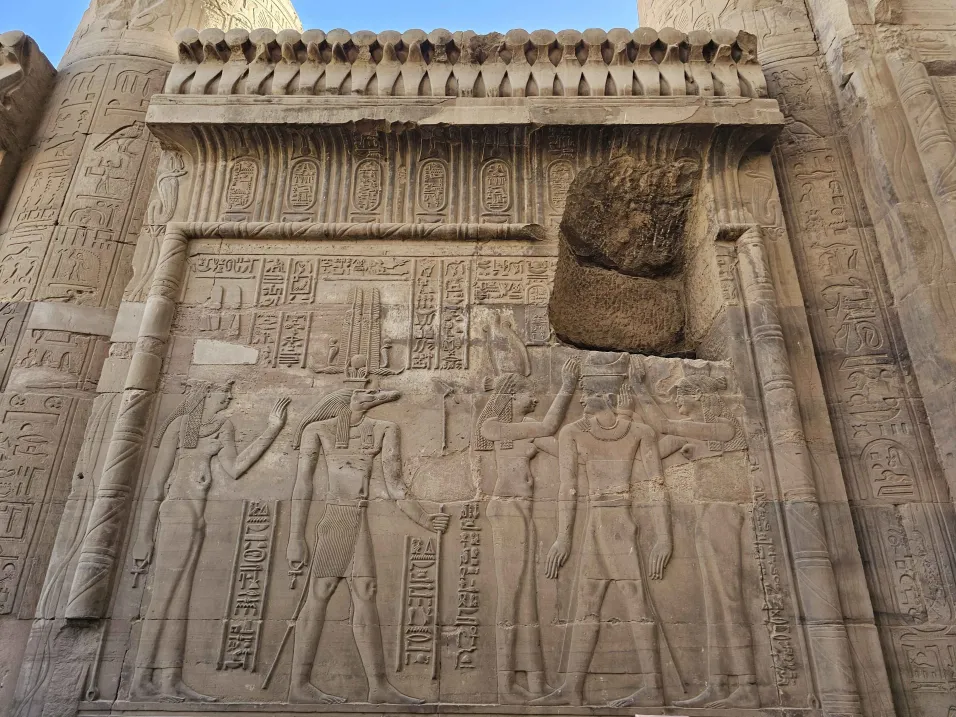
Kom Ombo defines itself through duality. This temple sits perfectly symmetrical, split between the Crocodile God, Sobek, and the Falcon God, Horus. Use symmetry as a silent language. If your players are in a Dwarven forge and see a massive gear on the ‘Fire’ side, they’ll instinctively hunt for its twin on the ‘Ice’ side. This dual design creates a satisfying “Aha!” moment for your players without you saying a word. By using intentional, mirrored design, the environment trains them to expect balance, opposition, and connection. The space itself becomes the tutorial for your players.
But duality is about more than just matching levers; it’s about the functional purpose of the space. At Kom Ombo, one half offered worship while the other functioned as a healing center.
From Form to Function:
Now, I see you over there, Beth—with your color-coded d20s and a 50-page Google Doc on desert trade routes. But here’s the thing: your players won’t remember the trade routes. They will remember the time they had to use a 3,000-year-old stone Nilometer (a stone column tracking water levels) to figure out if the dungeon was about to flood. That’s why functional tech design matters. Giving them systems they can use with things that players can touch, turn, and inevitably break.
Functional Realism: By including a scientific wing or infirmary in your temple. Carvings of surgical tools at Kom Ombo provide a sense of realism. Players have a logical place to find their healer’s kits, medicinal herbs, potions, and tools. (If you’re looking for physical props to hand out, you might even find some inspired blends at Thia’s Apothecary). When the Cleric runs out of spell slots, those tools stop being flavor and start being survival.
The Takeaway:
Use layout and tech to teach players how your world works.
Lesson 3: Turning Lore into Drama
While other temples dominate the landscape, Philae feels different. Known as the “Pearl of Egypt,” it rests on a quiet island, reachable only by boat. Even more remarkably, this entire temple was moved piece-by-piece to escape rising floodwaters. This history is the perfect inspiration for a hidden sanctuary or a high-stakes rescue mission.
A Serene Dreamscape
Philae feels romantic and almost dreamlike. Stray cats wander between sun-warmed stones, and birds nest among intricately carved walls that have stood for millennia. These ruins provide a bright shift from the typical dusty tomb. It’s a place filled with light, warmth, and life. And that’s exactly why it works. Because when danger finally breaks that calm, it not only surprises your players; it shatters the peace they were starting to trust. muahahaha
History as Gossip, Lore as Drama
The heart of Philae is the story of Isis, Osiris, and the treacherous Uncle Set, certainly a high-stakes family feud. To make the lore stick, treat it as gossip. Skip the facts. Tell them about the jealous uncle who tricked his brother into a coffin … then scattered pieces of him across the land. This scandal hooks the players.
Vandalized Art
That drama doesn’t just live in stories, it’s carved into the stones. In many temples, Set’s image was defaced or erased years later by those that hated him. Use this erasure as a hook. Finding a mural with one specific figure missing triggers immediate questions. Maybe the High Elf Queen’s face has been scratched out of every mosaic in the town, or a Orcish war-chief’s name has been chiseled off every victory monument. This turns a routine history check into a juicy investigation with the energy of a murder mystery.
Sinking History
We know Philae had to be saved from the water, you can put your players in a similar race against time. Imagine a temple slowly sinking into a swamp or disappearing beneath a sea of lava, or avalanche. Instead of simply looting, your party races alongside NPCs to save sacred carvings and preserve ancient knowledge. They’ll have to decide what’s truly irreplaceable before the doors seal forever.
The Takeaway:
Don’t present lore as history. Present it as gossip. Turning lore into conflict gives your players something they will never forget.
In Conclusion:
My journey through these temples taught me that great world-building isn’t about facts—it’s about feeling. It lives in the chill of stone, the weight of silence, and the sense that something is watching.
Whether I am crafting a new puzzle or blending a signature scent for my shop (which, I promise, smells much better than a 3,000-year-old tomb), the goal remains the same: to bring the game to life.
So as you plan your next session, I encourage you to look beyond the mummies, and the Hollywood tropes. Build with purpose; design with duality. And your world won’t just be seen … It will be felt.
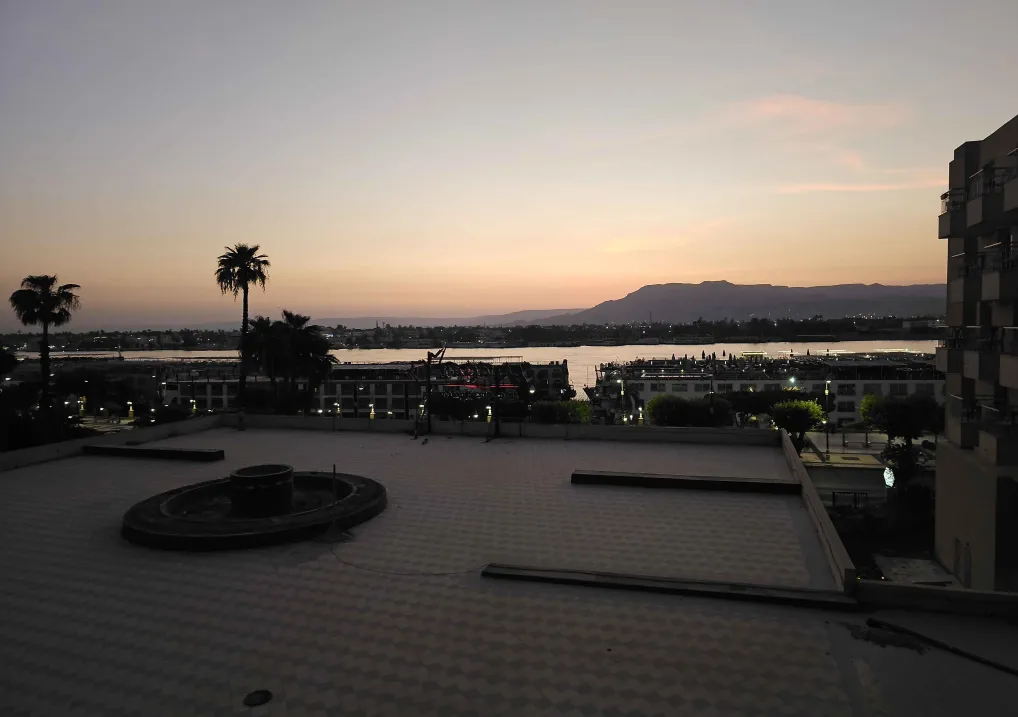
Photos from my trip to Egypt

Zara is a teacher, mother of humans, partner, and servant to one very lucky cat. As the creative force behind Thia’s Apothecary, she brings magic and immersion to the tabletop. With over 4 years as a DM, Zara has navigated the mists of Barovia and built homebrew worlds inspired by Ancient Egypt. When the dice are away, she “brews” artisanal soaps, plays ball hockey, or enjoys music and dance—always dreaming up new narrative detours for the next generation of heroes.
Connect with the Magic: Etsy | Instagram | Facebook


6 responses to “Build for Awe: 3 World-Building Lessons from the Temples of the Nile”
There’s a lot of good stuff about world building here. You show how to dig deeper and bring things alive in different ways.
Thanks! I really wanted to explore how we can move beyond the typical mechanics and make the setting feel more immersive. Do you have a favorite way to bring your world to life?
Great article! It’s a neat approach to world building: think if an inspiring place your you’ve visited, but fill it with the people and experiences of when it was created.
Exactly! I’ve always found that the best inspiration comes from the places we’ve actually stood in. It makes the world-building feel so much more grounded and real.
Zara, this was an amazing read! First, I gotta say, I’m extremely jealous of your trip to Egypt, what an amazing real-life adventure!
Ancient Egypt has always facinated me. The pharaohs, pyramids, hieroglyphics, mummies, and definitely the gods, it’s fascinating in terms of pure history, and of course as you excellently presented, they are a great source of inspiration for ttrpgs.
While all of your worldbuilding ideas were top-notch, the vandalized art was something that really resonated with me. Perhaps because I’m keen to puzzles, but the idea of finding frescos and murals with a specific individual scrubbed out seems like the kind-of mystery story I want to tell.
Really dig this line of writing, again, looking forward to more. On to the next!
Thanks so much, Wally! Egypt was honestly surreal — standing in those temples felt like walking directly into a campaign setting. I hope you get to visit soon!
I’m so glad the vandalised fresco idea resonated with you! That was one of the moments in Egypt where my DM brain immediately started spinning. There’s something so fascinating about seeing someone intentionally erased from history. It instantly makes you start asking questions and imagining what happened, and what stories are hidden beneath the surface.
I really appreciate the encouragement, and I’m looking forward to writing more for the site!