In the RPG world I would argue that only one thing has undergone a seismic change. Mapping.
Yes, Dungeons and Dragons itself has undergone multiple rule changes (don’t get me started on 5.5) and there have been plenty of new RPGs with various takes (welcome Blades in the Dark), but while new RPG rulesets have come (and gone), ultimately dice rolls still decide fate. Yes, the internet means we can play with people half-way across the world, but fundamentally we are still a group sitting around a table, even if it is a virtual one.
However, technology has transformed mapping beyond anything early gamers (me!) could have imagined.
A Lost Art
Way back then, the DM would have both hex paper and graph paper as key tools. Hex paper held the world map, while graph paper captured the dungeons beneath it. As the players explored, the DM described each corridor, chamber, and junction. The players then drew their own maps based on how they interpreted the DM’s descriptions. This interpretation was a key part of playing and sometimes had interesting results. Becoming lost was a real risk, when the map suddenly didn’t make sense, especially if the DM was crafty.
Every corridor, every junction, and every landmark had to be observed, remembered, and recorded. The result: players were not merely moving through a dungeon; they were uncovering it piece by piece.
Maps For A Modern Table
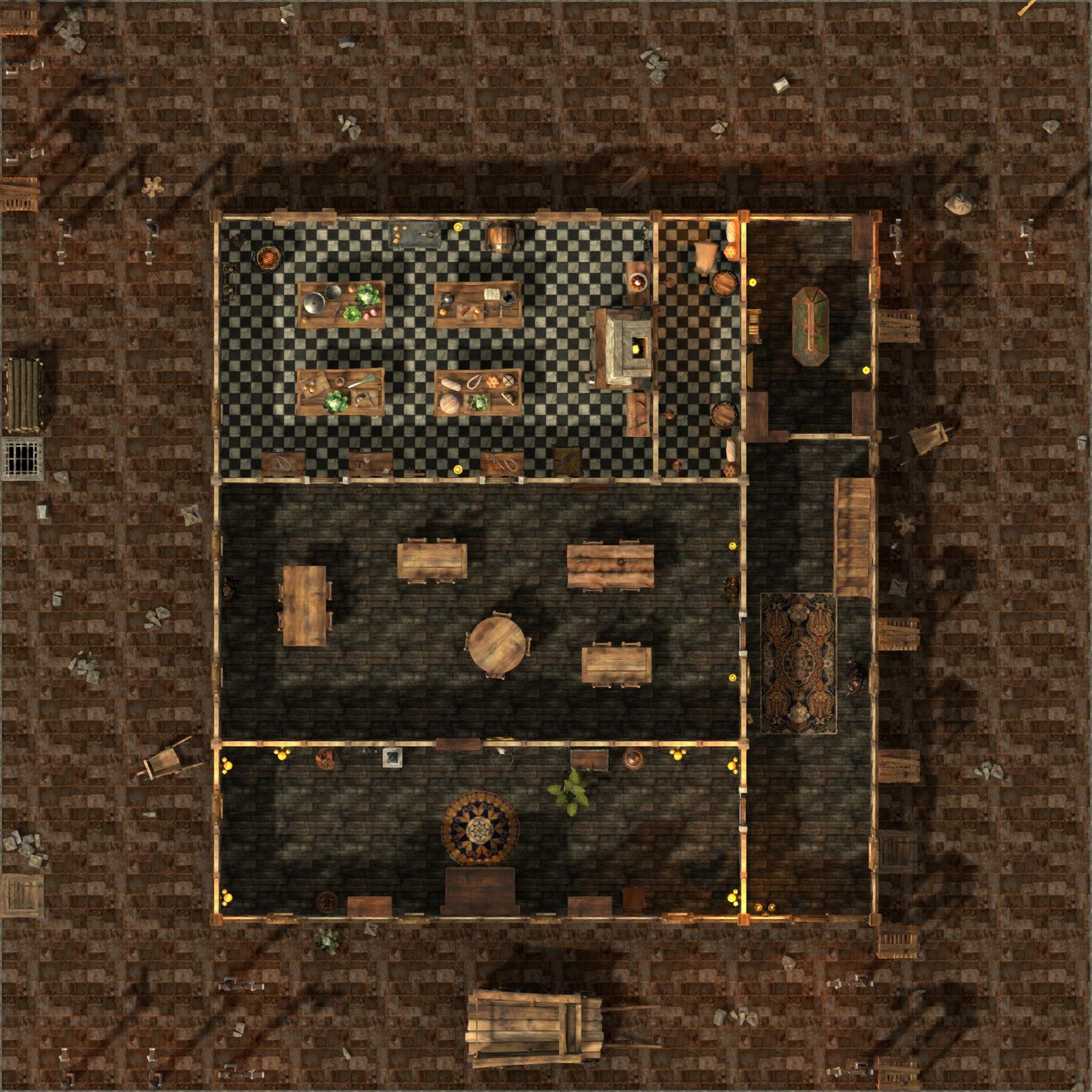
Today players expect to see a map. Whether on Roll20, Foundry, or Discord, the assumption is that there will be a visual reference available from the moment the game begins. A sprawling world map greets the party. A battle map appears the moment initiative is rolled. Dungeons are revealed room by room through carefully managed fog of war.
I am not here to argue if this change is good or bad. Something is certainly lost when a DM lets a beautiful map do the talking instead of describing the feel of a dungeon and creating its unique atmosphere. But for this article, my argument is that, if we understand this change then we can leverage it to further strengthen our campaigns.
Old School Maps
The technological leap has been remarkable. What once required pencils, rulers, and a stack of graph paper can now be accomplished in a few clicks. Entire continents can be generated procedurally. Even non-artists (such as myself) can create breathtaking regional maps rich with terrain, roads, settlements, and political borders. Virtual tabletops can measure movement automatically, track line of sight, and reveal hidden passages at the touch of a button.
The old player-made map was not merely a record of where the party had been. It was an act of exploration. The map existed only in the minds of the players and on the paper they drew themselves. Every turn required attention. Every description mattered. A missed detail could send adventurers wandering in circles for an hour. Cartography was a skill, just as valuable to a dungeon expedition as fighting or spellcasting.
Entire adventures were built around navigation. Was that passage fifty feet or sixty? Did the corridor branch to the east or southeast? Was the chamber circular, or had the mapper simply interpreted it that way? This uncertainty was part of a DMs design, understanding what could confuse. For the players a poor map could become the source of tension, argument, and occasionally disaster. Those imperfect maps created a powerful sense of the unknown. The dungeon felt like a real place the players were discovering, not simply a diagram the DM revealed one room at a time.
Navigation to Presentation
The purpose of the map has shifted. Where older maps challenged players to understand a space, modern maps present that space with near-perfect clarity. Today’s players seldom become lost because the software itself keeps perfect track of their location. Secret doors remain hidden, but the shape of the explored dungeon is often recorded with absolute precision. A strange missing space between rooms becomes clear simply because of that precision. A dungeon crawl becomes less about understanding space and more about choosing which unexplored area to enter next.
Again, this is neither good nor bad. It is simply different. Modern maps excel at clarity and accessibility. They reduce misunderstandings between players and game masters and allow groups to focus on story, tactics, and character development. At the same time, they remove a layer of challenge that older generations of gamers accepted as a normal, and desirable, part of the hobby.
Perhaps the real history of RPG mapping is not a story of improvement but of changing priorities. We traded uncertainty for convenience, imagination for precision, and hand-drawn approximations for professional-quality artwork. Whether that trade was worthwhile depends largely on what each group seeks from the game.
Viewed through that lens, the history of RPG mapping can be divided into four distinct ages.
The Cartographer Age (1970s-1990s)
For the first two decades of the hobby, maps were often hidden things. The Dungeon Master possessed the “real” map while the players struggled to reconstruct it from descriptions.
A typical dungeon crawl involved one player assuming the role of mapper. While everyone else worried about monsters, traps, and treasure, the mapper sat hunched over graph paper, carefully translating the DM’s words into corridors and chambers. “The passage extends twenty feet north before turning northeast.” Every measurement mattered.
This was not merely bookkeeping. Mapping was a game mechanic.
A poorly drawn map could become a genuine threat. If the party became lost in a sprawling megadungeon, supplies dwindled and wandering monsters became increasingly dangerous. Secret doors might never be found because players did not realize there should be empty space beyond a wall. Entire expeditions could end in failure because someone miscounted squares or drew a passage at the wrong angle.
The dungeon existed primarily in the imagination. Players developed a mental image from fragments of description, and no two players imagined exactly the same place. Dungeons felt mysterious because they were genuinely unknown. Exploration was an act of discovery rather than revelation.
The mapper was often the unsung hero of the party. A good map could mean survival. A bad map could spell doom.
The Published Map Age (1990s-2010s)
As RPG publishing matured, maps became increasingly professional. Adventure modules featured beautifully drafted dungeon layouts, regional maps, city plans, and world atlases.
Ironically, these maps were usually intended for the Dungeon Master’s eyes only.
Publishers such as TSR, and later Wizards of the Coast, produced maps that were not merely gaming tools but works of art. Detailed cartography became a selling point. Settings such as the Forgotten Realms, Greyhawk, Dragonlance, and others became places players could visualize in remarkable detail.
At the same time, battle maps began creeping onto the table. Dry-erase grids, dungeon tiles, cardboard terrain, and eventually miniature-heavy encounters gave players a more concrete understanding of space. Combat became more tactical. Distances became exact rather than estimated.
This period represents a transitional era. Exploration remained important, but a visual culture was emerging. Players increasingly expected visual aids for combat, while exploration continued to rely on description and imagination..
Dungeon Masters spent countless hours photocopying maps, covering rooms with paper, drawing layouts by hand, or revealing sections piece by piece. The map was moving from a hidden reference tool to a shared play surface.
The Digital Age (2010s-Present)
The arrival of both virtual and interactive tabletops fundamentally transformed mapping.
Platforms such as Roll20, Foundry, Fantasy Grounds, Owlbear Rodeo, and others turned maps into living objects. Dynamic lighting could automatically reveal rooms. Fog of war could hide unexplored territory. Walls could block sight. Doors could be opened with a click.
For the first time, the map could react to the players. As a character rounded a corner, new corridors appeared. A closed door blocked sight until someone opened it. Light sources cast shadows. Hidden chambers remained concealed until discovered. The map no longer represented the dungeon; in many ways it behaved like the dungeon.
Maps stopped being drawings and became simulations.
That shift brought enormous benefits in clarity and immersion. Yet it also raised an interesting question: when the software remembers every turn, measures every distance, and records every explored corridor, what happens to the challenge of finding your way through the unknown?
Changing Expectations
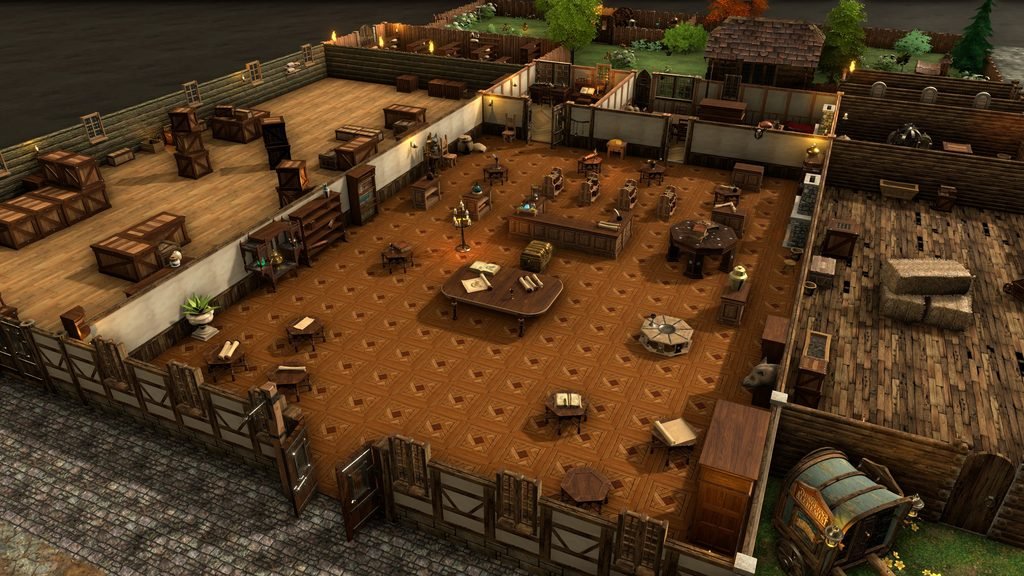
Modern DMs have access to assets previous generations could scarcely imagine. Animated rivers flow across landscapes. Torches flicker in dungeon corridors. Rain falls across city streets. Entire continents, mountain ranges, rivers, and kingdoms can emerge from an algorithm in minutes. Independent artists now sell professional-quality maps that rival products once available only from major publishers.
Players consequently view maps differently. Many expect visual references for almost every location. “Theater of the mind” play survives, but often competes with a culture that prizes visual immersion.
The benefits are obvious. Confusion is reduced. Accessibility improves. New players can immediately understand their surroundings. Tactical play becomes smoother and faster.
Yet digital mapping changes the relationship between player and environment.
The software remembers everything. Distances are exact. Shapes are precise. The risk of becoming truly lost has almost disappeared. Exploration becomes less about building an understanding of a place and more about uncovering portions of a pre-existing image.
A dungeon is no longer something the players construct in their minds. Instead of building the dungeon in their imaginations, players watch it emerge on a screen.
The Fourth Age?
We may already be entering a new era.
Artificial intelligence can generate maps in seconds. Three-dimensional virtual environments are becoming more common. Some virtual tabletops now incorporate animated scenery, soundscapes, weather systems, and automated game mechanics. Exploration is beginning to resemble navigating a video game rather than sketching unknown passages on graph paper.
As technology continues to evolve, DMs face a choice. Do they want players to feel like explorers, adventurers, protagonists, or inhabitants of a living world? The maps they choose will shape that experience. The answer has changed several times already, and there is every reason to think it will change again.
Summary
Think of how you use maps as how you want your players to feel. Have an overall approach so your group are comfortable in what to expect, but don’t be afraid to suddenly throw in a change of pace, by playing with how you use maps it is possible to add to both excitement and uncertainty. Maps can be an emotional tool, not simply a navigational one.
Remember:
Cartographer Age: “We are explorers.”
Published Map Age: “We are adventurers.”
Digital Age: “We are protagonists.”
AI/Immersive Age: “We are experiencing a world.”
Ultimately, the question is not what sort of maps you use, but what sort of experience you want to create.
Ask what role mapping should play in your RPG.
Maps are not merely tools for showing players where they are. They are tools for making players feel something about where they are.
A map is far more than a record of terrain or a way to track movement. It tells players how to think about the world around them. It shapes their confidence, their uncertainty, and even what they pay attention to. Before selecting a beautiful battle map or deciding to run a dungeon entirely through description, it is worth asking a simple question: How do I want my players to feel?
And that may be the biggest change mapping has undergone since those first sheets of graph paper appeared on gaming tables half a century ago.

Involved with RPGs since the 1980’s (not that I like to think about exactly how long ago that is), mainly focused on being a DM for D&D but also dabbling in other rulesets.
Run long running campaigns, one shots, convention games, and open world servers on Discord.