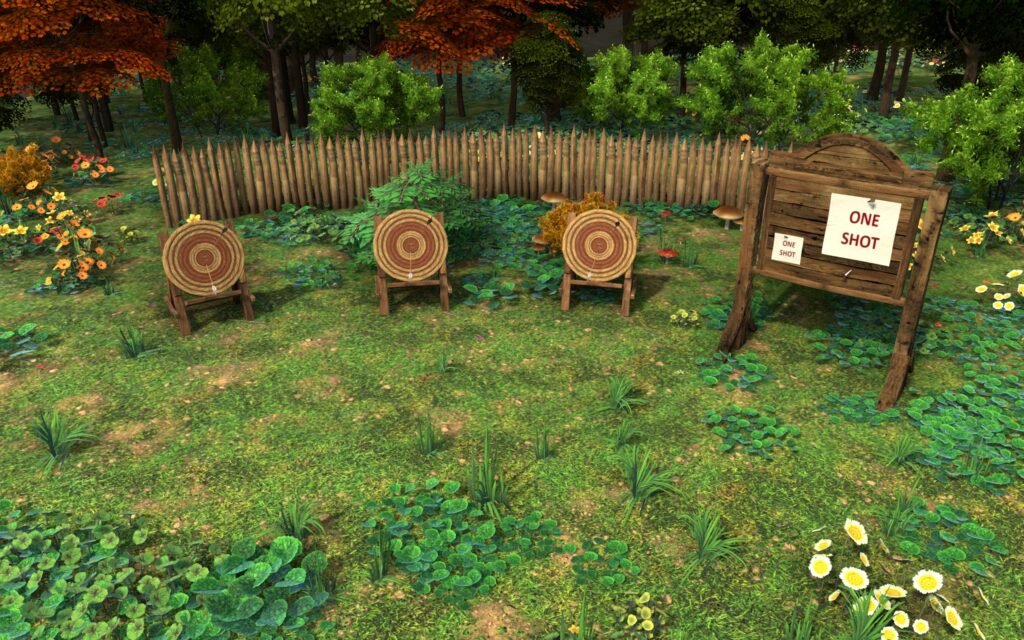
We have looked at planning versus improvisation. We have looked at published content versus homebrew. But what about One Shots?
One Shots are a single (maybe two) session adventure. You may use them for a group who will never meet again. You may use them as an interlude for your normal party, especially if one person can’t make it that night.
Importantly, they are deceptively complex to run. You would think that a single adventure has to be easier than a campaign. Reality is different as it turns out that the DM has to fit a lot of things into a very tight time frame.
Running One Shots is not running a campaign. You have strict time pressures. Especially at conventions, but even with a friend group, once everyone goes home then you may not get them together again. Yes, I still have a One Shot started three years ago that we never completed!
In order to navigate this challenge, think of the session in beats or chapters. Watch Oceans 11 and think about how that film is made, it relies on the same beats that you need for your planning. Allocate time to each beat and then you will easily understand if you are on track during the game. How much time is required for each beat will depend on the One Shot.
For each beat below I will include an example from a One Shot Train Heist I ran. As it was for a convention then running over time was not an option.

Beat 0 – Pre-Game Planning
You may, or may not, need this. One of my favourite One Shots to run is “Murder on the Eberron Express”. A player is randomly chosen as the murderer. The other players work out “who dunnit”. The characters and their backgrounds are all pre-set. The real complication is that they each have different relationships (and hence motives). Before the session everyone needs to be in contact so they can work the details out, eg when did they meet, are they having an affair etc. It takes about two weeks of planning, you need to know that your players are on board for this
In other situations, such as “Everyone Is A Kobold”, no one needs to do anything, they just each get a kobold and when (not if) that kobold dies then they get a new one. All with exactly the same stat sheet. 5hp doesn’t last long! My current record is killing 31 kobolds in three hours.
The Great Train Robbery didn’t require much pre-game, but we went over safety tools and I asked about their lines and veils. Even in One Shots, don’t forget safety Time required – Individual messaging on Discord
Beat 1 – The Intro
Once the session begins, even if your players know each other then a quick intro is a good idea. Go around the group allowing them each to give a moment to say who they are and what they will enjoy from the game. Then introduce yourself and any house rules (taking a potion is a bonus action, giving a potion full action, rule of cool outweighs rules as written etc).
It might not seem worth the time, but I can’t tell you how often people have come to me afterwards to say how much they appreciated the chance for a bit of grounding. It helps build the feel of a team. And, after all, that’s what RPGs are, a team game.
Three of the players had played in my games at other conventions, by spending a little time on the intro it allowed the others to become a part of the group rather than being on the outside. 10 minutes
Beat 2 – The Set Up
Setting the scene. A chance for you to describe why the players are all there, and then a chance for them to voice in character who they are. It is also a moment for them to clarify any questions, to ensure they understand what constitutes success.
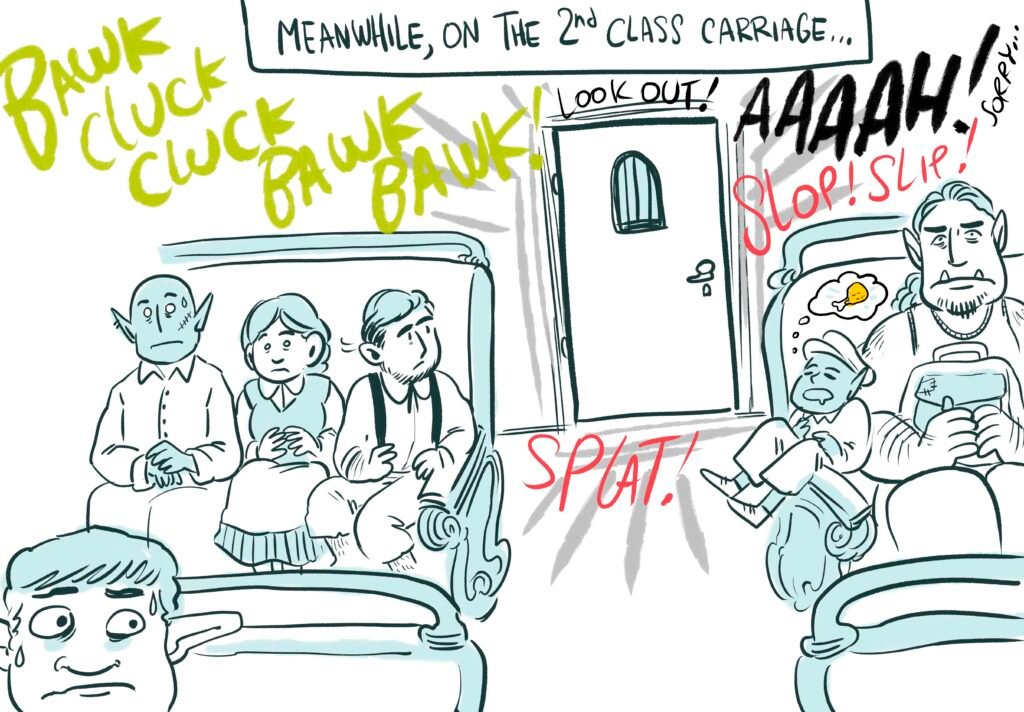
An NPC named Donovan hired the PCs, explaining that they needed to raid a train hired by the Barbarossa gang and steal an item from the vault in one of the carriages. As the PCs asked questions they discovered the gang all wore the same bandanas and they learnt they had three options for attacking the train. 20 minutes
Beat 3 – The Preparation
A chance for the players to plan. The scene has been set, how are they going to go about achieving the task. Give them time to talk, a mixture of in character and out of character. Let them get comfortable with what is coming up.
The players went to a store and bought red bandanas as disguise so they could look like the gang. They discussed the options – board at the station and raid later, attack at the plains, or attack in the canyon. Each had benefits and drawbacks that Donovan had explained. 40 minutes

Beat 4 – The Early Engagement
The good and the bad meet. This may be puzzles, or minions, or a mixture of both. But it gives the party a time to probe, to learn about each other in action. What can they expect other players to do. Bear in mind, especially in D&D, combat is relatively slow so keep it simple.
The players approached the train on horseback from the front to avoid the gatling gun, and managed to climb on board. They quickly overcame the driver and guard, preventing a message being sent for reinforcements. Making their way over the carriage roofs they came to the vault and solved the intricate magic lock to steal the item. 60 minutes
Beat 5 – The Big Bad Boss
The showdown. This is the top line. Where it all comes together. This is the point where you want them to feel jeopardy, to wonder if they are going to get through the session alive.
In the scenario of the Great Train Robbery, this was the escape, to get to the horses in the rear carriage they had to fight through a carriage with the boss and his guards. 40 minutes
Beat 6 – The Happy World
The wrap up. Don’t overlook this. I have in the past and it leaves a slightly empty feeling, an anti-climax. The party have to have time to reflect and enjoy what they have achieved. They have to be able to cheer about their victory (or commiserate on their failure). This is also a great time of learning for you as DM, listen to what they remember, what they enjoyed, what made them laugh – and then incorporate those parts into your next game.
With the success of returning the item to Donovan the PCs could enjoy their spoils, and the players could revel in their victory, talking of the exploits jumping from horseback onto the train, working out how not to get electrocuted, and the daring escape. 10 minutes
Backup Plans
Once you have the framework, think about what to do if it doesn’t go according to plan – it won’t, because there are players involved. You need to think through two scenarios – it is going too quickly, or it is going too slowly.
Have some additional encounters ready in case the players have sped through everything. In the train robbery, had they retrieved the item and defeated the boss with time to spare then I was going to have a couple of ankheg attack them on the ride back to town.
And if it is going too slowly – which you know because you have planned your beats – then know where you can trim. In the heist then I would have removed the puzzle of the magic lock on the vault.
A Last Word
As a DM running a One Shot you have one more important task. Be aware of your players. Someone may be shy, or feel overwhelmed if they are new to D&D while other players are experienced. It is your job to make sure everyone has a moment to shine. If someone is quiet then make sure you ask them questions, describe something their PC sees for them to respond to.
Summary
One Shots are great fun, they remove a lot of the pressures of a campaign and they allow the DM to be a bit more “Rule of Cool” rather than “Rules As Written”, you can hand wave more things because you aren’t setting a precedent. That allows a lot of fun, and you can expect a lot of laughs.
Be situationally aware, both of time and the players, to make it a brilliant experience for everyone. This is easily done by using “beats” to break up the game in your head.

Involved with RPGs since the 1980’s (not that I like to think about exactly how long ago that is), mainly focused on being a DM for D&D but also dabbling in other rulesets.
Run long running campaigns, one shots, convention games, and open world servers on Discord.


2 responses to “One Shot Wonders”
This is very similar in how the level a session article could work because each session is generally considered a one shot. It takes a lot of pressure off when it’s not long term and things can be crazy.
As a DM, I might do session prep for a session of an ongoing campaign and if we don’t get to it all, its fine, we just pick up where we left off next time. But yeah, on a one-shot, the DM needs to be able to adjust pacing, sometimes removing encounters entirely in order to complete the game in the alloted time.
In the one-shot adventures that I have written (and run at conventions), I commonly have optional encounters for an area to maintain pacing. Things like, if running behind on time, swap out this combat encounter for a trap – or a quick skill check or challenge.
Solid article Merlin, thank you for sharing your ideas. Cheers!