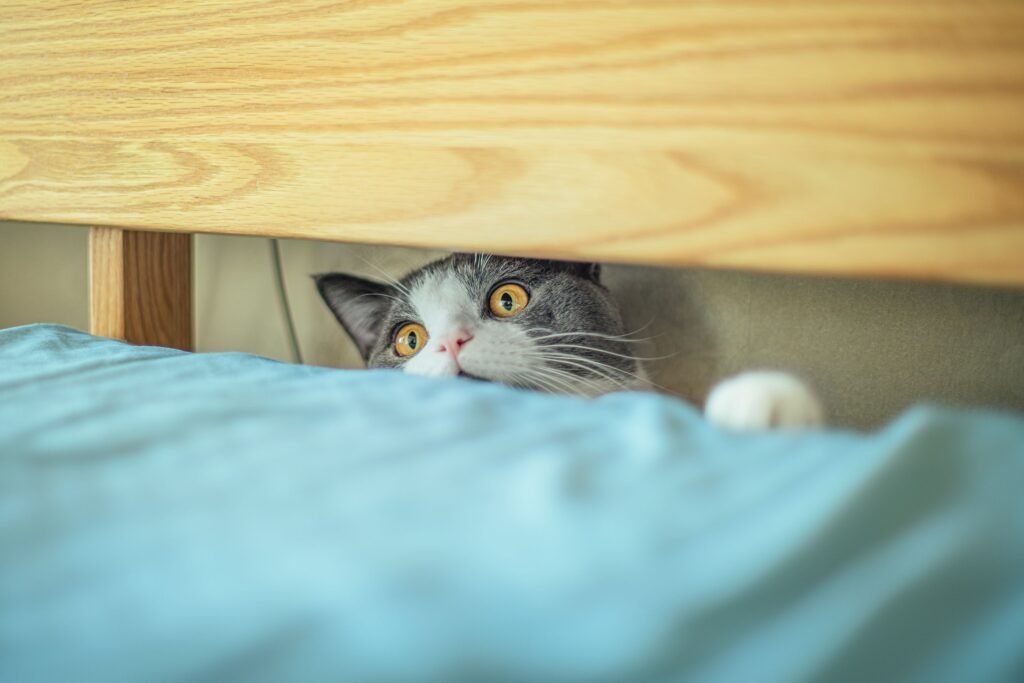
I can’t count the number of times I’ve seen a particular piece of game master advice stated as objective fact. It goes something like this:
“Risk is what makes games exciting. Therefore, it is your job as the GM to make sure the players are constantly in a healthy amount of fear for their characters’ lives. This will keep them alert and engaged, leading to greater enjoyment of the game.”
Perhaps you’re nodding along. Perhaps you do this regularly and your players love it. If so, great! You’ve found an approach that works for your table (although I hope this article might give you some further ideas to consider).
But for a group like mine, this advice backfires spectacularly. It leads to agonizingly slow gameplay while the PCs go through a long series of safety checks before touching any object. It leads to the party exiting a dungeon having interacted with less than half of what was there, while I feel like I wasted my time prepping all the things they never found or refused to try. In short, for some tables, this mindset creates an approach based on fear, not fun.
Calling this “scaredy-cat” behavior is not meant as an insult. It’s tongue-in-cheek and a little self-deprecating, because I too have that tendency as a player. I’ve left my share of fantastic jewels untouched for fear they might be trapped, so I know how it feels. Ironically enough, the impulse is driven by engagement with the game, the very thing that danger to the player character is supposed to promote. We are invested in our characters, and we don’t want to lose them.
But as a GM, I don’t want my players to approach their adventures timidly, fearing disaster at every moment. I want their main focus to be not on preventing failure, but on reaching for success! I want them to feel confident in their ability to recognize risks and to know they have the tools to deal with most surprises. Most of all, I want them to investigate and engage with what they find, rather than leaving it alone unless it is clearly required in order to progress. The question is, how do I inspire that mindset?
As with all advice regarding human reactions, there is no one-size-fits-all answer. But I can think of a few approaches. Each one addresses a different part of the motivation behind player timidity.
Carrots and Sticks
I’ll get the obvious one out of the way first. For some players, all it takes is a sufficiently strong lure. Whether it’s treasure, magic, forbidden knowledge, or just the chance to pull a lever, they’re excited to try for it. Learning your players’ favorite rewards and dangling them can do wonders toward encouraging them to try things. The incentive of the carrot can counter the fear of the stick.
Still, this is only a partial solution. Unless the whole group wants the same thing, you won’t motivate all of them at once. And while it may persuade the players not to bypass certain story elements, it won’t stop them from approaching the situation with extreme caution.
Give Them a Sense of Control
Players become timid partly because they worry that too few steps lie between health and death for their characters. They fear not being able to avert disaster because they won’t see it coming in time. This is affected greatly by the game system, as some are deadlier than others, but your GM style also contributes.
Make sure overcautious players have tools they know will be available in a crunch. For example, steer them toward character options that grant rerolls or other disaster mitigation mechanics. If it fits your GM style, you can assure them that you’ll always allow a saving throw or a chance to try to escape from a deadly situation. Or to give them more radical control over their characters’ fate, offer a resource like hero points that they can spend to declare that their characters are merely knocked out when they would otherwise die.
Some GMs have gone so far as to take the possibility of character death off the table entirely or to declare that a PC can only die if the player consents. It’s a drastic approach, but for some groups, it’s an effective one. You can do this through the aforementioned hero point resource, or you can simply agree to it as a group out of character.
But this too is only a partial solution. Some players will feel that too much control kills the tension. Worse, others will take it as a challenge to abuse the fiction. They’ll deliberately try to break the story by creating situations where a PC’s survival is nonsensical. If you have either type of player in your group, this is not going to address the problem fully.
What Do the Players Enjoy Risking?
The thing is, that original piece of advice has a kernel of universal truth in it. Risk is what makes games exciting. Where the advice goes astray is in assuming that the characters’ lives are always the only or best thing to risk on the fall of the dice.
There are other stakes besides survival, and if you find the right one to leverage, you may just find the sweet spot for your group, where they can embrace either success or failure. If risking their characters’ lives stresses them out, what about risking their characters’ reputations? Or their honor? Or their wealth? Designing adventures around those issues can be just as effective at keeping players engaged and, for some groups, much more fun.
A Holistic Approach
Ultimately, I try to draw from all these strategies to craft a solution that works for my players. On the adventure or campaign level, I set the stakes to challenge things they can have fun risking on the dice. On the location level, I dangle their favorite rewards to draw them in and encourage them to explore. And on the encounter level, I work to decrease their anxiety about losing characters. For my group, that has meant assuring them that if a PC dies and the player isn’t ready to retire the character, we will find a way to bring the PC back. But that’s just my solution. Yours will almost certainly look different.
I don’t claim to have completely solved this problem. My players still fall into their old habits from time to time. But it has improved. If you have an overcautious player or party, I hope this article has given you some tools that will help turn your scaredy-cats into lions. Let me know in the comments if there are any other techniques or specific game mechanics you have found helpful.




5 responses to “Are Your Players Scaredy-Cats?”
Having a cautious character isn’t a bad thing if its part of thier character traits. Its understandable if a Wizards afraid everything will kill them with a d4 dagger 🤣.
There are spells and tools in game to deal with a lot of situations. And it may be an idea to direct players to those options. Still it does come down to trust. If things go a certain way for so long players tend to fall into a sense of taking a situation for granted.
This is why I love Obojima. There’s low risk of death and many ways to deal with something.
Sure, there’s normal caution and then there’s overcaution. I tried to make clear in the post that I’m trying to find solutions for overcaution, when the caution is actually getting in the way of fun.
I haven’t tried Obojima yet, but I really want to!
Really dig this article. You did a great job!
I’ll share something that’s worked well for me. I’ve had similar issues in the past, so I started rewarding player characters for taking risks. Instead of every unusual decision or interaction leading to something bad, sometimes it leads to something beneficial.
For example, an icy pool of water could be a trap that damages anyone who enters, or it could be magical. A character who soaks in the pool for 1 minute might gain resistance to cold damage for the next hour.
Another example: there’s a single slice of cake sitting in an otherwise empty room. Instead of being poisoned, it’s a magical treat that grants 5 temporary hit points to whoever eats it. Of course, the cake is delicious… but it makes you incredibly thirsty. Luckily, there’s a glass of wine nearby… oops, that’s the poison. 😄
I’ve found that if I balance the scales between good and bad outcomes, players become much more willing to engage and take chances. At least, that’s the theory, lol.
Fantastic topic! Well done, Julie!
I’m glad you enjoyed the article. And I love that setup with the cake and the wine! That’s pretty devious.
Another great article from you that tackles a common problem, well done.
When I ran HoT for a group of new players I had one whose characters died more than everyone else’s combined. The reason for this is that he consistently made HEROES: he would be the first to enter rooms, he’d put himself at risk to protect downed allies, he’d interact with unfamiliar situations first (sometimes puzzles, sometimes traps), he made sacrifices for the good of the party, he was generous with split loot and potions, he sought out NPCs to enrich the story, he played dynamically – leaping unto enemies from above, attempt higher risk higher reward maneuvers, and generally lead by example.
I think that many players forget that its not the PC power boost compared to NPCs that makes their characters heroic, it’s what they decide to do with it. Sure, inching along w/ a 10-foot pole, detect magic, blindsight, and Aware is safer than not, but is it fun or worth preserving? (No.)