Good morning, good afternoon, good evening, everyone. Thank you for coming back. Grab yourself a drink and a snack, come sit by the hearth. Please, stay awhile and listen.
I have read a lot of books. Book books. Countless hundreds of books, and to count every single one I’ve read would require the use of a time machine, since I’ve been reading chapter books roughly since the age of eight.
Reading is important, not on just a daily basis, but also because of how I view myself and my writing. I call myself a Storyteller, and I take pride in that. I didn’t come up with the title, but rather adopted the title for myself.
The Storyteller
I first met the Storyteller while I was in high school. It was a show from the 1980s, produced by the legend that is Jim Henson and his Creature Workshop. I did not watch the Muppets growing up (despite having three younger siblings, we were surprisingly almost strictly Nickelodeon kids), but had long since been swept into the dark, intricate worlds of Labyrinth and The Dark Crystal. The Storyteller is no exception, telling the more unknown folkloric tales of Europe and later on Greek myths, surrounded by fascinating works of practical effects. Stories were brought to life with these tangible, living puppets that were always more than just layers of fabric and parts. They didn’t just exist for the sake of existing and occupying space.
The Storyteller didn’t just resonate with me with the retellings of European folklore and Greek myth; it was the atmosphere of the storytelling itself that called kin to kin. The Storyteller himself sat in a dark, foreboding castle, leaning into the warmth of a crackling fire. He was a magician in his own way, using the flickering light, shadows, and household objects to weave his tales. Storytelling doesn’t have to have the rigid formatting of text, but rather is a delicate interpretive dance between Speaker and Listener. It is that “hearth-side” intimacy, weaving the smallest of details in the narrative tapestry, that I strive to recreate.
When I sit down to write, be it the short thirty minutes I have for my work lunch or the countless hours spent typing away on my computer to plan for the next session, I imagine myself briefly in my own “storyteller” space. For me, this is a place that can be found in the Kingdom of Alamer, in the best tavern around. I no longer am a Listener, but instead take my turn on the stage, surrounded by commanded flame. I have become a Storyteller by trade and temperament, casting Prestidigitation to try and capture amazement with the very magic I fell in love with, testing the boundary of the physical Material Plane with the wonderment of planes beyond my imagination.
Of course, just like any other caster learning the wonders of the arcane, I too must do research to curate the perfect atmosphere for my narration. It’s constantly evolving thanks to a friendship with The Pagemaster.
The Pagemaster
Just like how Labyrinth and The Dark Crystal and even The Princess Bride are such defining movies for my love for storytelling, The Pagemaster is one of the defining reasons why I read as much as I still do.
Who remembers this movie from 1994? Hm? A young boy caught in a storm taking shelter in a grand library. An accident occurs, we go from live action to animation, and the guardian of the library, the Pagemaster, challenges the boy to navigate three literary realms, the genres of adventure, horror, and fantasy to reach the exit and return to the real world.
Sounds like a one-shot adventure to me. Even though I knew logically I wouldn’t be going on some grand adventure and fighting dragons inside a library, I still would delight in every trip I would take to the library. I used to even walk there when I used to live within walking distance to one. Every book I took interest in was a question and an answer between worn covers and stained pages.
From Alexandre Dumas and the Scarlet Pimpernel to Andy Weir and The Martian, there has never been a shortage of books for me to consume.
Even now, as an adult, I read on a weekly basis. I have had to make some adjustments over the years to how I read, but even dyslexia hasn’t managed to stop me yet. I read both physical and digital books, and it’s a rare occasion when I find books I dislike.
When I say every book was a question and an answer, it was not so much of “what is your contents.” Instead, I wanted to know what made them what they were. What made Tolkien, Terry Brooks, and so many Storytellers who came before me so beloved decades and centuries later? How many tellings of grand yet terrible objects of power falling into the wrong hands or evil tyrants hellbent on claiming what is not theirs? Every word of every chapter, page after page, all contained the elements I needed to learn and embrace and make my own.
Of course, I started with adventure and fantasy, the core genres I primarily write in. I had a chunk of the Great Illustrated Classics collection, a sanitized version of masterpieces that made it digestible for younger readers. The Count of Monté Cristo, War of the Worlds, 2,000 Leagues Under the Sea, and countless other grand adventures have me seeking beyond the horizon. The Chronicles of Prydain (the very inspiration for Disney’s take on The Black Cauldron) and the Merlin Saga were fundamental in my ever growing love for magic and fantasy. Both book series align with the type of stories that I treasured the most growing up. Epic fantasy, Celtic myth and folklore throughout, stories of protagonists coming of age. As I revisit these books again and again, even as an adult, I find little bits of my writing style were inspired by the very Storytellers I looked up to. They tell the stories in the way I want to tell them.
Lore
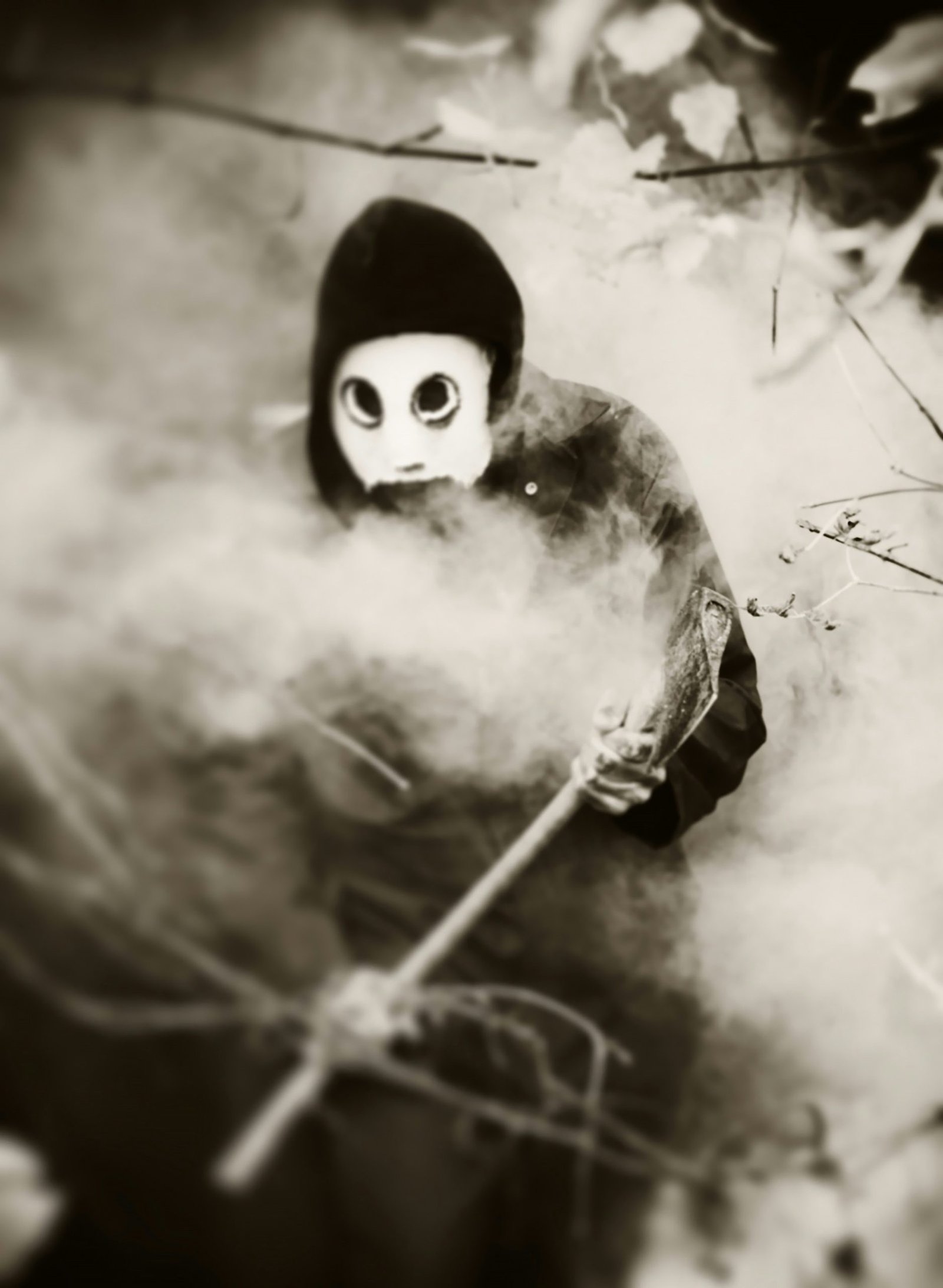
As vast as my reading history is, oddly enough, horror is one particular genre archetype I seem to have the least grasp on. That’s right, I’m calling myself out. I have a hard time understanding what is considered frightening in a literary sense. I find this rather amusing, considering I am somewhat fond of Edgar Allen Poe. I have started to read a bit into HP Lovecraft and read Rick Yancey’s Monstrumologist series, surprising myself by really enjoying it. I genuinely don’t read a ton of horror despite being rather appreciative of monster concept art. Please, if anyone has any suggestions so I can expand my ever growing personal library, I’d be forever grateful as a Storyteller. New or old, read and reread, every book I ever read has a home in my personal library.
Poe was my first literary introduction into the sphere of horror. His works like the Masque of Red Death, the Telltale Heart, and the Black Cat are short stories that have always stuck with me. Not because I had been frightened by what I read, but the artistry of it. The atmosphere, the commentary on the human condition, the controlled environment that allows one to explore dark and complex emotions, all of it masterfully manipulated to toy at the corners of the mind.
Instead of regularly consuming horror in an attempt to feel frightened, I turn to dissecting and researching the history hidden behind it all. Since 2015 I have been a fan of a podcast that takes a look at historical folklore and the macabre, essentially the history behind horror. Aaron Mahnke does this rather well through Lore.
Did you know, they made a tonic? A tonic for what?
To stop vampirism.
In the very first iconic episode of the podcast, Aaron mentions the rather fascinating connection between vampirism and illnesses, mentioning porphyria, rabies, and tuberculosis. In fact, he treats his listeners to the story of Lena Mercy Brown from Exeter, Rhode Island, who was a key player during the “Great New England Vampire Panic” in the latter half of the 19th century. Certainly not the only victim of this time period, mind you, and not the only panic that occurred within New England (being from Mass, I of course mean the Salem Witch Trials). I highly recommend giving Lore a listen to, regardless of whether or not you enjoy horror.
Even though horror is rarely the central thread I spin, its shadows do creep across my loom. If you look closely into the depths of my tales—like the city of Irinis, a place built on cruelty, sin magic and lies—you will catch glimpses of that darkness in the secret corridors of the Crucible or the silent halls of the Safehouse Palace. Yet I do not lead you into those dark corners to leave you cold. I share them so that when hope flares, its warmth hits you all the deeper. For here beside the hearth, we know the truth: where there is Dark, there will always be Light.
Until next we meet, goodnight, sleep tight, I will see you again soon.

Hello folks! I am Celeste Beauchesne, a creative individual with her fingers in a lot of pies. A sort of jack-of-all-trades, I love various forms of art, writing, and tabletop gaming. I am working on a novel series referred to as the Chronicles of Alamer, opening a jewelry business, and caring for my beloved partner!


One response to “The Storyteller, the Pagemaster, and Lore”
Horror is about invoking anxiety and uncertainty. Always a sense of danger. Older fairy tales, the original Grimm fairy tales are dark and harsh. Each teaching a lesson. Horror movies are supposed to show the dark side of things yet to me… its always felt “fake” beyonthe suspension of belief.
I would read goosebumps and these light scary things and was never scared by any of them. But here I am studying random mythology including Japanese Youkai lore. Now thats more scary.